
Key Takeaways
- Mild discomfort after root canal treatment is common and usually improves gradually as healing progresses.
- Pain after a root canal that lingers, worsens, or feels sharp when biting may signal an underlying issue that needs review.
- Common causes of ongoing discomfort include bite misalignment, residual infection, or cracks in the treated tooth.
- Early assessment helps prevent minor concerns from developing into more complex complications.
- A timely dental review clarifies whether healing is on track or if further treatment is needed.
Many patients expect a root canal to bring relief, which is why feeling pain days or even weeks later can be worrying. You may find yourself wondering whether the treatment worked or if something has gone wrong. While some discomfort is a normal part of healing, pain that lingers or worsens should not be dismissed.
This article explains what types of discomfort are commonly expected, when persistent pain may indicate an underlying issue, and how follow-up care can help support proper healing.
What Is Normal After a Root Canal?

Some degree of pain is common in the days after root canal treatment and does not usually indicate a problem. Mild to moderate tenderness, especially when biting or applying pressure, often occurs because the tissues around the tooth need time to settle after treatment. Even though the nerve inside the tooth has been removed, the surrounding ligaments and bone may remain temporarily inflamed as part of the healing process.
You may also notice temporary sensitivity or a bruised feeling in the treated area. This can result from the cleaning and shaping of the root canals during the procedure. While uncomfortable, it should remain manageable and not feel sharp or progressively worse.
More importantly, the healing process should follow a gradual pattern of improvement. Typically, post-root canal pain and discomfort should lessen day by day and ease within 1–2 weeks.
Common Causes of Ongoing Pain After Treatment
There are several reasons why discomfort may persist after a root canal, even when the procedure itself was carefully carried out.
1. Residual or Recurrent Infection
Teeth can have complex root structures, including narrow or curved canals that are difficult to clean completely. When bacteria remain or re-enter these areas, inflammation may persist, leading to ongoing discomfort even after the initial treatment has been completed.
2. Bite Misalignment After Treatment
Pain after a root canal can sometimes be caused by how the tooth comes into contact with opposing teeth. If a tooth filling or temporary restoration sits slightly too high, it might place pressure on the treated tooth during chewing, resulting in sharp or persistent pain when biting down.
3. Cracks or Structural Weakness in the Tooth
Teeth that have undergone root canal treatment are often more fragile, particularly if they have not yet been reinforced with a crown. Small cracks or structural weaknesses may not be immediately visible but can cause discomfort when the tooth is under pressure during normal function.
4. Post-Traumatic Trigeminal Neuropathic Pain (PTNP)
In a small percentage of cases, persistent pain after root canal treatment may be related to nerve injury rather than ongoing inflammation or infection. This type of discomfort, sometimes referred to as chronic post-endodontic pain, affects an estimated 3 to 7% of patients.
Neuropathic pain can feel different from typical dental pain. It may be described as burning, aching, or difficult to localise, and it may persist even when clinical examinations show no obvious cause.
When Persistent Pain May Signal a Problem
Generally, tooth pain after endodontic treatment that does not improve or intensifies over time may suggest that healing is not progressing as expected. While mild soreness should gradually settle, discomfort that remains unchanged or worsens deserves closer attention.
Look out for signs such as:
- Pain that lasts longer than one to two weeks without clear improvement
- Sharp or sudden pain when biting or chewing
- Swelling or throbbing discomfort around the treated tooth
- Discharge or a pimple-like bump on the gum near the treated area
If you notice any of these signs, it is advisable to arrange a dental review. Early assessment allows your dentist to determine whether the symptoms are part of normal healing or whether further treatment is needed to prevent complications.
What to Expect at the Dentist
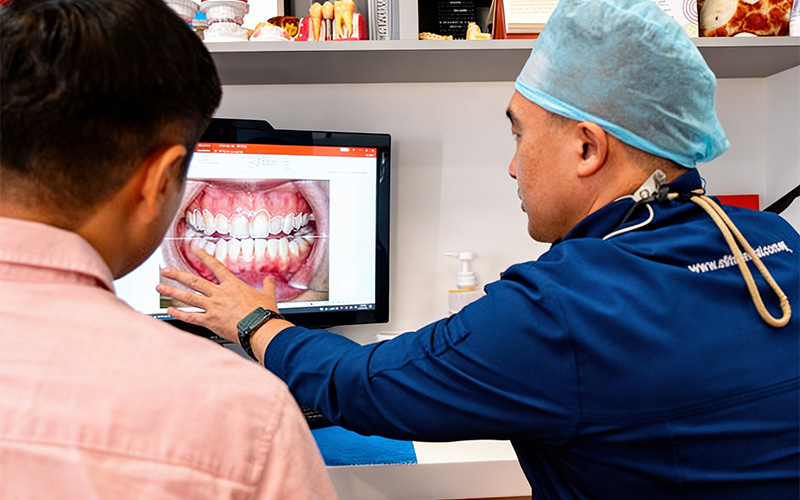
If the pain persists or worsens after a root canal, a follow-up visit is focused on identifying the cause and approach, not rushing into further treatment. The appointment usually begins with a discussion about your symptoms, including when the pain started, what triggers it, and whether it has changed over time.
Your dentist will then examine the treated tooth and surrounding area, checking for signs of inflammation, infection, or changes in the gums. Your bite will also be assessed to ensure the tooth is not under excess pressure when you chew. If needed, additional imaging may be taken to evaluate the roots and surrounding bone more closely.
Based on the findings, your dentist will explain whether the discomfort is part of normal healing or whether further care is required. Depending on the cause, possible next steps may include:
- Bite adjustment where the restoration is gently reshaped to relieve excess pressure on the treated tooth
- Further imaging, such as detailed X-rays or scans, to assess hidden infections, cracks, or changes in the surrounding bone
- Reinforcement with a crown to protect a weakened tooth and reduce stress during chewing
Retreatment or referral to a root canal specialist if persistent infection or complex root anatomy is identified
Conclusion
Living with unresolved pain after root canal treatment can affect daily comfort and peace of mind. While some discomfort is part of healing, pain that lingers or worsens is not something patients need to tolerate or guess about. Understanding what is and isn’t normal, and seeking timely review can help prevent minor issues from becoming more complex concerns.
At Elite Dental Group, we offer a complimentary 5–10 minute teleconsultation to help you understand whether your symptoms warrant an in-clinic review. Our team is trained to support patients with dental anxiety, taking a more reassuring approach to help you feel more at ease.
For patients who may feel anxious about surgical procedures, we provide a full suite of sedation options, including IV sedation and general anaesthesia where appropriate. We also use 3D CBCT analysis alongside digital software powered by artificial intelligence (AI) to plan each procedure tailored to your condition.
For more information, contact us today.
 Elite Dental Group