Ceramic inlays/onlays
What are dental inlays and onlays?
Dental inlays and onlays are used to repair, restore and reinforce severely damaged teeth or to replace large old defective fillings. Dental inlays and onlays are in between conventional plastic fillings and full coverage dental crowns.
Inlays and onlays are suitable for patients who are looking to restore their damaged teeth with the strength of a dental crown, but are unwilling to have healthy tooth structure trimmed down as is required for dental crowns . Many of our patients appreciate this minimally invasive approach.
When preparing teeth for inlays and onlays, healthy tooth structure will not be removed or trimmed.
It is increasingly common for patients to request for large, worn-down , leaking and corroded mercury fillings to be replaced and upgraded with an inlay or onlay, to reinforce the tooth further and to prevent problems.
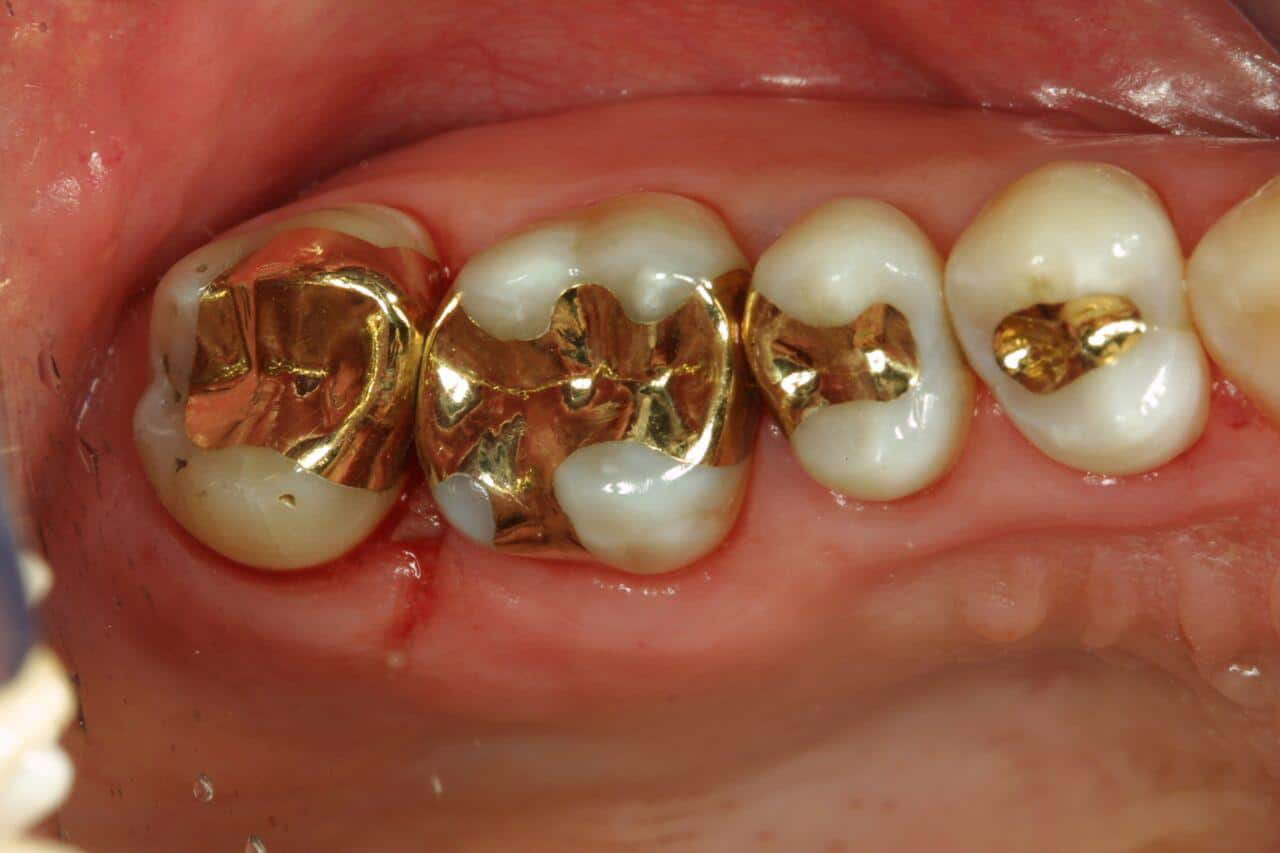
Different materials (Resin-hybrids, Ceramic or Cast Metal) can be used to make an inlay or onlay.
Each material type has its pros and cons and we will discuss with you the best material to use in your particular case.
The inlays/onlays are typically fabricated in the dental laboratory using sophisticated software and CAD-CAM milling machines. This indirect method of fabrication of a dental restoration is in stark contrast to the direct method of filling teeth with conventional plastic fillings.
In general, indirect restorations have superior physical properties and durability as compared to direct fillings.
What is the difference between an inlay and an onlay?
An inlay fills the space in between the cusps, at the centre of the tooth’s surface
An onlay covers one or more cusps that have thin walls at the base of the cavity to prevent tooth fracture.

Dental Inlays/Onlays at Elite Dental Group
If you have selected an indirect inlay or onlay, this is completed in 3 steps over 2 visits:
Step 1 (visit 1): Preparing your damaged tooth
First, your tooth and the surrounding tissues will be numbed with local anaesthetic. Decay and old filling material is then removed from your tooth. The cavity is then cleaned and refined. A base filling may also be placed to seal the tooth from bacteria.
Step 2 (visit 1): Taking a mould of the prepared tooth
A mould or digital scan of your prepared tooth is taken and then transferred to the dental laboratory. A temporary filling will then be placed to protect your tooth in the meantime.
Step 3 (visit 2): Fitting your inlay or onlay
Once your inlay/onlay is ready, the temporary filling will then be removed. The inlay/onlay will then be bonded onto your tooth and any excess adhesive will be removed. Your bite will then be checked to make sure it is balanced, before we give the inlay/onlay a final polish.
Frequently
Asked
Questions
Got questions? We’ve got answers! Check out our FAQ section for common inquiries and helpful information to guide you.
What are ceramic inlays and onlays?
Ceramic inlays and onlays are tooth-colored restorations made from dental ceramic materials that are custom-fabricated in a dental laboratory or using computer-aided design/computer-aided manufacturing (CAD/CAM) technology to restore damaged or decayed posterior teeth.
An inlay fits within the cusps (the raised points) of your tooth, similar to a filling, while an onlay covers one or more cusps, providing more extensive coverage. Both are considered “indirect restorations” because they are made outside the mouth and then bonded to the tooth, unlike direct fillings that are placed and shaped directly in your mouth.
These restorations offer an esthetic and durable alternative to traditional metal fillings or gold restorations, making them particularly popular for visible back teeth. They are designed to restore teeth that have moderate to large cavities or damage while preserving more natural tooth structure compared to full crowns.
When are ceramic inlays or onlays recommended?
Ceramic inlays and onlays are recommended when posterior teeth are weakened by wide cavity preparations or have moderate to large defects that are too extensive for direct composite fillings but don’t require a full crown. At Elite Dental Group, we emphasise on minimally invasive dentistry, favoring inlays and onlays over crowns when at least one cusp remains intact.
Specific situations where these restorations excel include: replacing old or failing amalgam fillings, restoring teeth with cracks that haven’t extended below the gum line, treating teeth with large cavities, and situations where optimal control of restoration contours and aesthetics is desired. They are particularly suitable when you want a metal-free, tooth-colored restoration that provides superior strength and longevity compared to direct fillings.
What types of ceramic materials are used?
Several types of ceramic materials are available for inlays and onlays, each with specific properties:
Glass-ceramics (such as leucite-reinforced or lithium disilicate ceramics) are the most commonly used materials, offering excellent esthetics and strong bonding to tooth structure. These materials achieve very strong, esthetic results and are particularly suitable for inlays, onlays, and small restorations.
Feldspathic porcelain provides superior esthetics with excellent color matching but is slightly less strong than glass-ceramics.
Zirconia (ZrO2) is a high-strength ceramic material that offers greater durability and has been shown to increase the time until failure compared to other ceramics. It is preferred in situations where the restoration will be exposed to high chewing forces.
Polymer-infiltrated ceramic networks are newer materials that combine ceramic and polymer properties, offering high edge stability and enabling thin restoration margins.
How long do ceramic inlays and onlays last?
Ceramic inlays and onlays demonstrate excellent long-term survival rates. Studies show survival rates of 92-95% at 5 years and 91% at 10 years. More recent long-term studies have documented survival rates of 93.9% at 15 years and 91.7% at 23.5 years. One study following restorations for up to 25 years found high success rates throughout the observation period.
The annual failure rate is approximately 1.0-2.7%, meaning these restorations are highly predictable and durable. Inlays and onlays made by supervised undergraduate students have achieved similarly high survival rates, demonstrating that these restorations perform well when proper techniques are followed.
Individual longevity depends on several factors including the tooth’s location, whether it has had root canal treatment, your oral hygiene, chewing habits, and the quality of the bonding procedure.
To make it more general, include conditiona paragraphs that explains that the longevity is dependant on different conditions
What are the advantages of ceramic inlays and onlays?
Ceramic inlays and onlays offer several significant advantages:
Superior esthetics: They provide excellent color matching and natural appearance that remains stable over time, unlike composite fillings which can discolor.
Durability and strength: When properly bonded, ceramic restorations are substantially stronger and significantly more wear-resistant than direct composite fillings, making them the superior choice for teeth subjected to heavy chewing forces.
Tooth structure preservation: Compared to full crowns, inlays and onlays require less removal of healthy tooth structure, aligning with minimally invasive dentistry principles.
Biocompatibility: Ceramic materials are highly biocompatible and do not cause allergic reactions.
Reduced polymerization shrinkage stress: Unlike direct composite fillings that shrink during hardening and can cause gaps or sensitivity, ceramic restorations are fabricated outside the mouth, eliminating this problem.
Longevity: They demonstrate excellent long-term clinical performance with high survival rates.
HOW CAN WE
HELP?
Heading to a dental clinic can be a scary and almost overwhelming experience. If you have landed on our website, we would like to extend our warmest welcome to you and your family. There is nothing to fear!
If you require more information about our costs or are looking for ways to save money on dental treatments, arrange for a consultation with our dentists at a time of your convenience.
 Elite Dental Group