Surgical Removal of Dental Cysts
What is a dental cyst?
A dental cyst is a fluid-filled sac of tissue in your gums and/or jawbone. Most of the time, a cyst is painless. There are many different types of dental cysts.
What are the different types of dental cysts?
The different types of dental cysts are:
- Dentigerous cysts,
- Periapical cysts, and
- Odontogenic keratocysts.
Where can dental cysts be found?
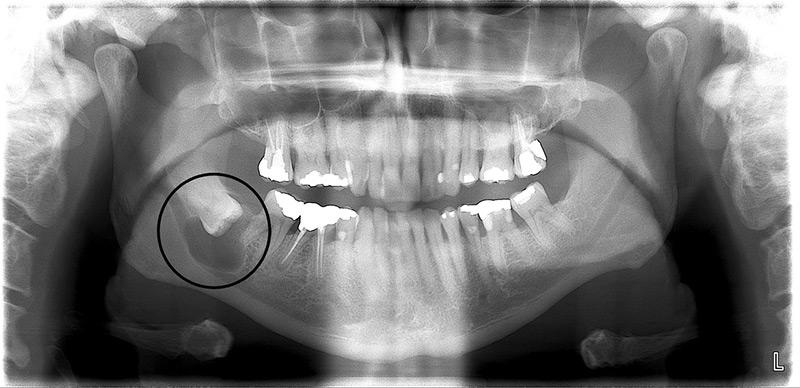
Dental cysts can be found around the roots of dead/infected teeth, within the gums, around impacted wisdom teeth, in your maxillary sinuses or within the jawbone.
What problems can dental cysts cause?
Dental cysts may cause these problems:
- Pain and/or swelling due to infection
- Weakening of the jawbone from expansion of the cyst
- Migration of teeth that are being pushed aside by the growing cyst
- Breathing and sleep problems related to sinus issues.
Symptomless dental cysts can remain undetected for months or years.
What are the common symptoms of dental cysts?
There is usually no obvious dental cyst symptom. In fact, most of the patients we see do not realise that they have a dental cyst until it gets infected. However, we have realised that patients with dental cysts often come to the clinic with the following conditions or problems:
- Teeth sensitivity
- Displacement of teeth
- Loose teeth
- Gum swelling
- Gum discomfort
- Facial numbness from cyst pressing onto a nerve
How do I know if I have a dental cyst?
A small dental cyst developing inside the jawbone may be visible on an X-ray. Larger cysts may cause a firm facial swelling to appear. Your teeth may also start migrating rapidly in the area affected by the cyst.
Confirmation of the cyst diagnosis is done from a tissue sample (biopsy) taken during surgical removal of the lesion. There are other tumours that may resemble cysts, but are treated very differently.
Periodic dental x-rays are essential for identification of dental cysts and other bony abnormalities.
How are dental cysts treated?
There are two ways to treat a dental cyst:
- Surgery – for the removal of all types of cysts or tumours.
- Endodontic Therapy – This is done in conjunction with surgical removal if the cyst is associated with an infected root canal.
Surgical Removal of Dental Cyst at Elite Dental
Step 1: Detection
Dental cysts are normally picked up during a routine examination,which includes dental x-rays.
Your dentist may order a 3D CBCT scan that will provide more information about the cyst and its relationship with surrounding teeth and other structures (nerves, sinuses) within the bone.
Step 2: Pre-surgical preparation
A few days before, a thorough scaling and polishing is done. An oral probiotic is also given to boost the numbers of beneficial bacteria in the saliva so that healing is smooth.
If you require root canal treatment, this will be completed prior to the surgery.
Step 3: Removing the cyst
The cyst is removed by our in-house oral surgeon through a window in the bone under a local anaesthetic. You may also choose to be sedated for the entire procedure to ensure an anxiety free experience.
If there is a tooth embedded within the cyst, it might also be removed. Bone grafting material may also be placed to fill the void left behind after the cyst is removed. Stitches will be placed in the gums afterward. These will be removed after a few days.
The excised tissue can be sent to a pathology lab to be identified under microscope. This is important for identifying other types of tumours that may resemble cysts.
Can I treat a dental cyst at home?
The fast answer is yes, it is possible for you to treat your dental cyst at home. In the event where your dental cyst is small or mild with no inflammation, it is possible for you or a patient to treat dental cysts with antibiotics.
Some patients are also able to use a home remedy to treat dental cysts. However, it is still strongly advised that patients visit a trusted dentist before attempting any home remedy or self-treatment.
Topics
- What is a dental cyst?
- What are the different types of dental cysts?
- Where can dental cysts be found?
- What problems can dental cysts cause?
- What are the common symptoms of dental cysts?
- How do I know if I have a dental cyst?
- How are dental cysts treated?
- Surgical Removal of Dental Cyst at Elite Dental
- Can I treat a dental cyst at home?
- FAQ
Frequently
Asked
Questions
Got questions? We’ve got answers! Check out our FAQ section for common inquiries and helpful information to guide you.
Is a dental cyst removal painful?
Surgical removal of dental cysts is generally not a painful procedure, as it is performed under effective local anaesthesia, which reliably blocks pain during the procedure. Postoperative discomfort typically peaks within the first 24 hours and is usually well managed with nonsteroidal anti-inflammatory drugs (NSAIDs), such as ibuprofen or naproxen, often in combination with acetaminophen.
At Elite Dental, we employ a multimodal approach to ensure patient comfort and minimise anxiety. This includes thorough preoperative communication, as well as sedation options such as Intravenous (IV) Sedation and General Anaesthesia (GA), where appropriate.
The most suitable sedation method will be recommended based on your overall health condition, medical history and treatment requirements on a case-by-case basis. For example, IV sedation may not be suitable for patients with certain underlying medical conditions, including uncontrolled bleeding disorders. Our dental team will conduct a comprehensive assessment beforehand to determine the safest and most appropriate option for each patient.
How long does it take to remove a dental cyst?
The duration of dental cyst removal can vary depending on factors like:
- The size of the cyst
- The location of the size
- The complexity of the cyst removal procedure.
A simple cyst removal procedure usually takes less than an hour. More intricate cases could require longer procedures.
In some cases, additional time is needed for anesthesia and post-surgical monitoring. We will be able to provide you with a precise estimate after evaluating your specific case.
How serious does a dental cyst need to be before surgical removal?
Surgical removal of a dental cyst becomes necessary when it threatens oral health. Minor cysts that worsen over time can cause major oral and health problems if left untreated.
If a cyst causes persistent pain, swelling, or discomfort, it should be evaluated for surgical removal. Cysts that impact nearby teeth, bones, nerves, or gums can result in functional problems and long-term damage.
Early intervention is key to prevent complications like infection, bone loss, or structural damage. Consulting a dental professional for assessment is crucial. We can determine the severity of the cyst and recommend necessary measures to ensure good oral wellbeing.
Can I head to work immediately after my dental cyst surgical removal?
You may return to light duties immediately after a dental cyst removal. However, you are eligible for medical leave (MC) and it is advisable to plan at least one day off to allow for proper recovery.
The rate of surgical recovery varies from individual to individual. It is also dependent on the extent of the procedure. It is common for swelling and mild discomfort to be felt post-operative. Rest and recovery can help aid the healing process and reduce risks of complications.
It is best to consult us for personalized guidance regarding post-surgery activities before resuming your routine.
What is the difference between a dental cyst and an abscess?
A dental cyst and an abscess both involve localized infections in the oral region, but they differ in origin and characteristics.
A dental cyst is a sac filled with fluid or tissue that can form near the root of the tooth. It grows gradually and might not cause immediate symptoms and may not be acutely infected.
An abscess, on the other hand, is an acute infection often caused by bacterial invasion into dental pulp or gum tissue. It is accompanied by rapid pain, swelling, and possibly pus formation.
While both require professional attention, dental cysts tend to develop slowly, while abscesses manifest suddenly with more intense symptoms.
Can a dental cyst regrow?
A dental cyst can regrow if it is not completely removed during surgery, with recurrence rates particularly elevated in aggressive or multilocular cysts such as glandular odontogenic cysts and odontogenic keratocysts. Incomplete excision leaves residual epithelial lining or satellite cysts, which serve as a nidus for regrowth.
HOW CAN WE
HELP?
Heading to a dental clinic can be a scary and almost overwhelming experience. If you have landed on our website, we would like to extend our warmest welcome to you and your family. There is nothing to fear!
If you require more information about our costs or are looking for ways to save money on dental treatments, arrange for a consultation with our dentists at a time of your convenience.
 Elite Dental Group