Key Takeaways
- Unlike conventional implants, immediate dental implants are placed soon after tooth extraction. However, not every case is suitable for this approach.
- The suitability of immediate placement depends on factors such as bone support, gum health, and absence of infection.
- Common risks include reduced initial stability, infection during healing, and less predictable integration with the bone.
- Certain situations, such as bone loss, complex extraction sites, or aesthetic concerns, may make immediate placements unsuitable.
- A professional assessment is important to determine whether these types of implants are appropriate for your condition and long-term needs.
Introduction
Immediate dental implants may be appealing, especially if you are looking for a faster way to replace a missing tooth without waiting months for healing. The idea of restoring your smile in a shorter timeframe can feel reassuring when having a missing tooth affects your daily comfort, function, and self-confidence.
However, this option is not suitable for every situation. Immediate dental implants come with several risks, limitations, and key considerations that dentists must consider before proceeding with treatment.
What Are Immediate Dental Implants?
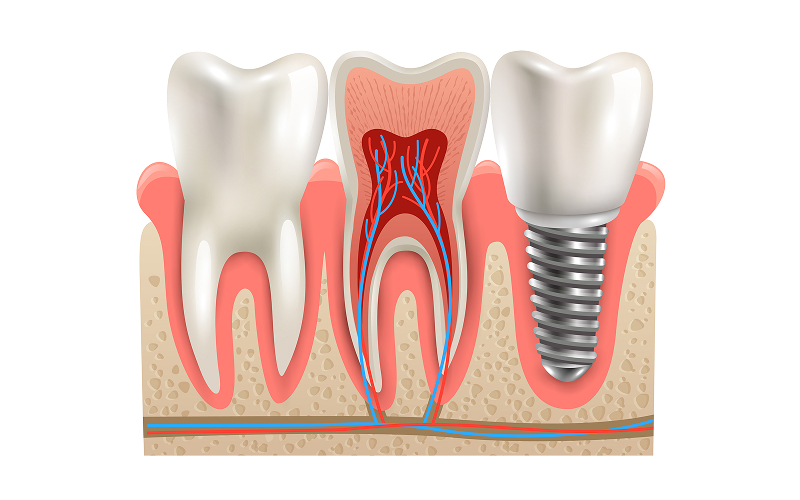
Immediate dental implants, also known as same-day dental implants, are placed at the same appointment as a tooth extraction, or shortly after, rather than waiting several months for the site to heal.
The tooth implant is inserted directly into the fresh extraction socket, allowing treatment to begin without a separate healing phase. This option is designed to reduce overall treatment time while helping to preserve the natural contours of the surrounding bone and gums. It differs from a conventional implant approach, where the extraction site is allowed to heal fully before the implant is placed, often in a separate stage.
What Happens During Immediate Implant Placement?
During the placement of immediate implants, several steps must be performed in a single session.
1. Case Assessment Before Extraction
Before the tooth is removed, your dentist evaluates whether immediate placement may be suitable. This includes assessing bone support, gum condition, and tooth position using clinical examination and cone beam CT (CBCT) imaging.
2. Tooth Removal and Site Evaluation
The tooth is then removed to preserve the surrounding bone and soft tissue as much as possible. After extraction, your dentist will review the site to confirm whether conditions are appropriate for immediate implant placement.
3. Implant Placement Within the Extraction Socket
If the site is assessed to be suitable, your dental surgeon will place the implant within or slightly beyond the existing socket to engage stable bone. Because the natural socket shape is not always ideal, the surgeon will work within these limits to position the implant and help achieve initial stability.
4. Managing Gaps Around the Implant
Small spaces may remain between the implant and the socket walls. These may be left to heal naturally or managed with grafting material, depending on the size and location of the gap.
5. Temporary Crown (When Appropriate)
A temporary crown may be placed if the implant is stable and not exposed to significant biting forces. In some cases, the implant may be left without a visible restoration during the healing phase.
6. Healing Under Close Monitoring
In follow-up sessions, your dentist will monitor the implant and observe whether it integrates well with the bone. Regular visits are important to ensure the area is healing as expected before the final crown is fitted. Your dentist may also prescribe antibiotics to help reduce the risk of early implant failure.
What Are the Risks?
Placing an implant immediately after extraction introduces specific clinical challenges.
1. Concerns About Implant Stability
One key concern is the implant’s initial stability. After removing a tooth, the surrounding bone may be compromised or become uneven. It can be more difficult to achieve adequate anchorage in this environment, increasing the risk of early movement. This can affect the healing process and long-term success of your implant.
2. Infection and Issues During the Healing Process
Infection is another consideration. If the extracted tooth had decay or gum disease, bacteria may still be present in the area. This can affect the healing process and increase the likelihood of complications if the site does not respond as expected.
3. Uncertainty of Osseointegration
Osseointegration is the process by which the implant bonds with the jawbone. For this to happen, the implant needs to remain stable and be surrounded by healthy bone during healing.
With immediate placement, there may be small gaps between the implant and the extraction socket, or areas where the bone is thinner. These conditions can affect how well the implant bonds with the bone. In some cases, the implant may not integrate as expected, and further treatment may be needed.
Limitations of Immediate Dental Implants

Not every case or patient may be suitable for immediate implants.
1. Sites with Bone Loss or Thin Bone Walls
After a tooth is removed, the remaining bone may be too thin or insufficient to securely support an implant. Without adequate bone, it can be difficult to achieve the stability needed for healing.
2. Presence of Infection or Inflammation
If the extracted tooth was affected by advanced decay, abscess, or gum disease, bacteria may still be present in the area. Placing an implant into an infected site may affect how the tissue heals.
3. Front Teeth with Higher Aesthetic Demands
For teeth in visible areas, the gum tissue may shrink or change shape after extraction. These changes can affect how the final crown looks, especially if placement is done immediately.
4. Complex Extraction Sites
Teeth with multiple roots, fractures, or irregular shapes may leave behind an uneven socket. Immediate dental implants must be placed within this existing shape, which can make it more difficult to position and achieve stable support. Delaying the implant process allows time for the site to heal, remodel, or be grafted before placement.
Conclusion
Immediate dental implants can offer a shorter treatment timeline, but they also come with specific clinical considerations that vary from person to person. It’s important to consult your dentist, who will be able to assess key factors and determine whether same-day implants are appropriate for your situation.
At Elite Dental Group, we take a patient-first approach to implant planning. Our team uses digital imaging processes and a fully digital workflow to support assessment and treatment. For more complex cases, we work with a multidisciplinary team, including an implant surgeon, periodontist, and prosthodontist, to plan and carry out each stage of treatment.
If you have any questions or concerns about whether you may need a dental check-up, you can also explore OralLink, an AI-powered dental screening platform co-founded by Dr Gerald Tan. You can enter your symptoms or take a photo to receive an initial assessment before scheduling an appointment at one of their partner clinics.
Speak to our team to understand your options today.
 Elite Dental Group