
Key Takeaways
- Root canal treatment may be needed when the pulp inside a tooth becomes irreversibly inflamed or infected, but a dental examination, X-rays and pulp vitality testing are required to confirm this.
- Singapore private-clinic fee benchmarks range from S$400 to S$1,400 for root canal treatment, depending on the tooth and complexity of the case.
- A dental crown is often recommended after treating a premolar or molar and is usually charged separately from the root canal procedure.
- Although extraction costs less upfront, replacing the missing tooth with an implant and crown may make it more expensive over the long term.
- Eligible patients may receive CHAS subsidies, while those aged 60 and above may be able to use Flexi-MediSave for qualifying treatment.
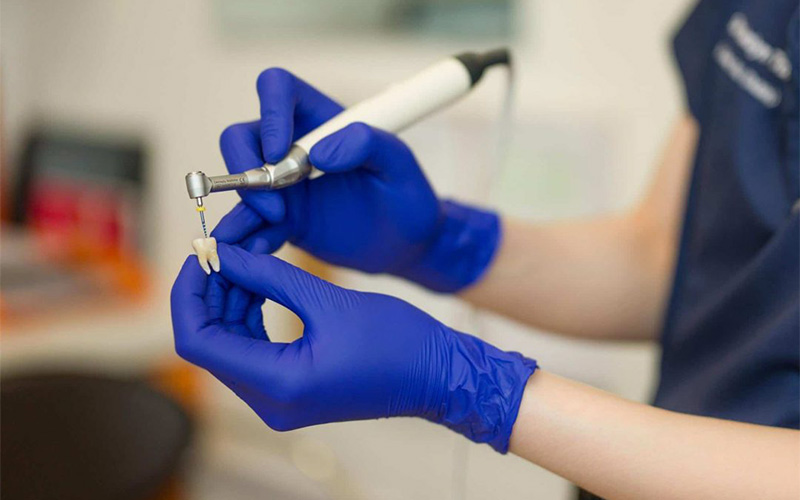
A common concern about root canal treatment is not only the procedure itself, but also the costs involved. For patients already dealing with dental pain, this uncertainty can add unnecessary stress. To help ease these concerns, the following breakdown explains what influences the cost of root canal treatment in Singapore, what the process typically includes, and how it supports long-term oral health and tooth preservation.
How Do You Know If You Need a Root Canal?
You may need a root canal if the soft tissue inside your tooth becomes inflamed or infected and cannot heal on its own. This can happen because of deep decay, a cracked tooth, dental trauma or repeated treatment on the same tooth.
Common signs include persistent tooth pain, prolonged sensitivity to hot or cold, pain when biting, swelling around the gums or darkening of the tooth. However, some infections cause few noticeable symptoms, so an examination and dental X-rays may be needed to confirm the problem.
A root canal dentist can assess the affected tooth and determine whether root canal treatment is necessary or whether another form of care may be more suitable.
Signs You May Need a Root Canal
You may be advised to undergo root canal treatment if you experience:
- A persistent toothache that does not settle with painkillers
- Pain when biting down or when releasing your bite
- Sensitivity to hot or cold that continues after the stimulus is removed
- Swelling or tenderness in the gum near the affected tooth
- A recurring abscess or pimple-like bump on the gum
- Noticeable darkening of a single tooth
These symptoms may indicate that the pulp inside the tooth is inflamed, infected or no longer healthy. However, not every toothache requires root canal treatment. Mild pulp inflammation may sometimes improve after decay is removed and the tooth is restored with a filling.
A dentist will usually assess the tooth through a clinical examination, dental X-rays and pulp vitality tests before recommending the appropriate treatment.
What Does the Cost of Root Canal Treatment Typically Cover?
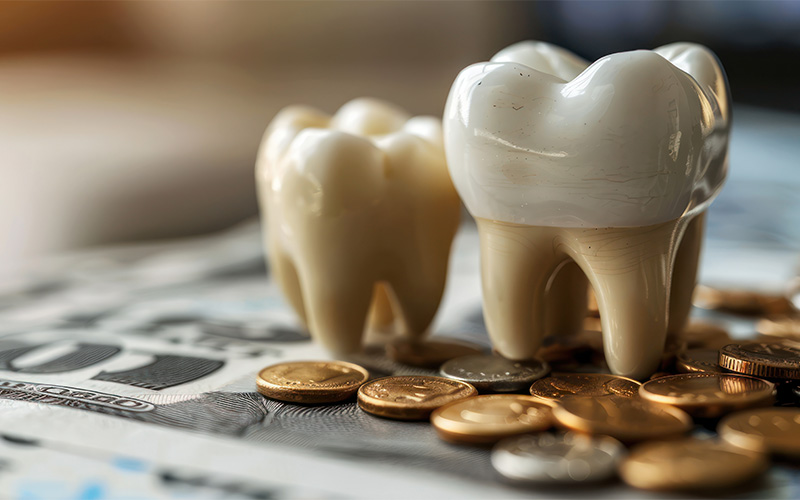
Before proceeding with treatment, it’s important to gain a clear understanding of what you are paying for. Root canal treatment involves multiple clinical steps, each contributing to the overall fee. This typically includes:
- A detailed clinical assessment by the dentist
- Cleaning and shaping of the root canals
- Disinfection to remove infected tissue and reduce bacterial load
- Sealing of the canals to lower the risk of reinfection
- Placement of a temporary filling to protect the tooth, followed by a permanent crown
At Elite Dental Group, the cost of root canal treatment usually ranges from $900 to $2,000. This amount does not include consultation fees, X-rays, scans, or any additional procedures that may be required before treatment begins.
It is also worth noting that root canals and other non-surgical dental treatments are typically not claimable under Medisave. Some patients may be eligible for CHAS subsidies at participating clinics, depending on their scheme and the services provided. Your dentist can help clarify what applies in your case before treatment begins.
Why Treatment Costs May Vary
The cost of root canal treatment in Singapore can vary because every tooth has a different structure, level of damage and treatment history. Your dentist will assess the following factors to estimate how much time, clinical work, and follow-up care may be required.
The Type and Location of the Tooth
Front teeth usually have one canal and are easier for the dentist to access. This generally makes them more straightforward to clean, shape and seal.
Premolars may have one or two canals, while molars commonly have several canals with narrower, curved or branching root systems. Their position at the back of the mouth can also make treatment more technically demanding. As a result, molar root canal treatment often requires more time and may cost more than treatment for a front tooth.
The Extent of the Infection or Inflammation
A tooth treated at an earlier stage may require less extensive cleaning than one with a large abscess or a long-standing infection around the root. More advanced cases may involve greater bacterial contamination, damaged tissue or infection that has spread into the surrounding bone.
The dentist may need to place medication inside the canals and temporarily seal the tooth between appointments. Additional visits may be required to allow symptoms and infection to settle before the canals can be permanently filled, increasing the overall treatment time and cost.
Whether It Is an Initial Treatment or Re-Treatment
A first-time root canal usually involves removing the infected pulp before cleaning and sealing the canals. Re-treatment can be more complicated because the dentist must first remove the previous root filling, posts or other restorative materials to reach the canals again.
The dentist may also need to identify untreated canals, blockages, fractures or areas where infection has persisted. These additional steps require more time and specialised techniques than an initial procedure. Complex cases may be assessed or managed by a root canal specialist.
The Complexity of the Root Canal Anatomy
Root canals are not always straight or clearly visible. Some teeth have very narrow canals, sharp curves, calcification or additional branches that are difficult to locate and clean.
Complex anatomy may require magnification, specialised instruments or more detailed imaging to reduce the risk of leaving infected tissue behind. These clinical requirements can affect the final treatment fee.
The Condition of the Remaining Tooth Structure
Root canal treatment addresses the tissue inside the tooth, but the tooth must also have enough healthy structure remaining to support a lasting restoration. Teeth with extensive decay, large fillings or deep cracks may require additional procedures before or after the root canal.
A core build-up or dental crown may be recommended to restore strength and protect the tooth from fracture. These restorative costs are generally separate from the root canal procedure itself and should be considered when reviewing the total cost of saving the tooth.
Whether the Tooth Can Be Predictably Preserved
Not every damaged or infected tooth can be successfully restored. A tooth with a severe vertical fracture, extensive decay below the gum line or inadequate bone support may have a poor long-term outlook.
In such cases, the dentist may discuss extraction rather than proceeding with treatment that is unlikely to provide a durable result. Replacement options, including dental implant services, can then be considered based on your oral health, treatment goals and suitability.
Why a Crown Is Often Recommended After Root Canal Treatment
While a root canal involves removing infection from the tooth, it may not restore the tooth’s original strength. After the nerve and internal tissue are removed, the tooth can become more fragile over time, particularly when exposed to everyday biting forces. The tooth may also have already lost a significant amount of structure because of decay, cracks or previous fillings before treatment begins.
For this reason, a dental crown is often recommended as a separate step following treatment. The crown covers the visible portion of the tooth, helping to distribute biting pressure more evenly and protect the remaining structure. Patients looking for a dental crown in Orchard can discuss whether this restoration is suitable based on the location and condition of the treated tooth.
A crown can help to:
- Reinforce the treated tooth and protect it from cracking
- Restore comfortable biting and chewing function
- Reduce the likelihood of fractures that could eventually lead to tooth extraction
- Rebuild the tooth’s shape when a large amount of structure has been removed
- Create a more stable seal over the treated tooth and its core restoration
Crowns are more commonly recommended for premolars and molars because these teeth are exposed to heavier chewing forces. In some cases, a front tooth may not require a full crown if enough healthy structure remains, although the final recommendation depends on the extent of damage, the size of the existing filling and how the tooth is used when biting.
The cost of the crown is usually charged separately from the root canal treatment. Patients should therefore ask whether the treatment estimate includes the core build-up, temporary restoration and final crown when comparing the overall cost of preserving the tooth.
Root Canal or Tooth Extraction: Which Costs More Over Time?
A tooth extraction has a lower upfront price than root canal treatment, but it may not be the less costly option if the missing tooth later needs to be replaced. The more useful comparison is therefore between the total cost of saving the tooth and the total cost of removing and replacing it.
Although a root canal may appear expensive upfront, preserving the natural tooth often helps avoid the added time, procedures and adjustments that can follow tooth removal. Based on Singapore Ministry of Health fee benchmarks for routine cases at private dental clinics, root canal treatment ranges from S$400 to S$775 for a front tooth, S$500 to S$900 for a premolar and S$872 to S$1,400 for a molar. A permanent crown, which is commonly recommended after treating a back tooth, ranges from S$750 to S$1,400. This places the combined benchmark for a molar root canal and crown at approximately S$1,622 to S$2,800, excluding consultations, X-rays and other additional procedures.
By comparison, the MOH benchmark for a routine extraction is S$70 to S$120 for a front tooth and S$93 to S$164 for a back tooth. However, this amount covers the removal of the tooth rather than its replacement. MOH’s published institutional figures show that an implant with a crown averaged approximately S$5,509 across the seven public healthcare institutions reporting fees for 2024. Actual private clinic fees and the cost of more complex cases may be higher.
When a tooth is removed, replacement options may be needed to restore function and appearance. These can involve additional appointments, longer treatment timelines and ongoing care. Leaving the gap untreated may also allow neighbouring teeth to tilt into the space or the opposing tooth to move further out of its socket. The jawbone around the extraction site can gradually reduce in volume, potentially making future implant treatment more involved.
Tooth loss may also place extra stress on nearby teeth, which can lead to further issues down the line. Preserving the natural tooth, where possible, allows many patients to maintain their normal bite and avoid a chain of follow-up procedures. For a restorable molar, the long-term financial comparison may therefore be approximately S$1,622 to S$2,800 to complete a root canal and crown, versus around S$5,500 for extraction followed by an implant and crown. It should not be viewed simply as S$1,622 for tooth preservation versus S$93 for extraction.
However, root canal treatment is not suitable for every tooth. Extraction may be the more appropriate option when a tooth has a deep fracture, severe decay below the gum line, inadequate bone support or too little remaining structure to support a crown. Your dentist should assess whether the tooth has a reasonable long-term outlook before recommending that you invest in preserving it.
For patients who work, live or frequently visit central Singapore, an assessment at a dental clinic in Orchard may also make it easier to attend the examination, treatment and follow-up appointments that root canal care can require. The dentist can assess whether the tooth can be restored predictably and explain which option is likely to offer better long-term value.
For many patients with a restorable tooth, root canal treatment can bring greater peace of mind and stability in the long run.
Bringing Clarity to Your Next Step at Elite Dental Group
When dental pain or infection is involved, having clear information matters. Understanding why endodontic treatment is recommended, what the process involves, and how costs are structured helps patients make decisions more confidently.
At Elite Dental Group, we understand that treatments such as root canal procedures can feel intimidating, especially if you have experienced discomfort or anxiety during past dental visits. Our team is trained to support patients with dental anxiety, taking a calm, patient-centred approach to help you feel more at ease throughout your visit. Our doctors will also take the time to explain your condition and all available options in a reassuring, no-pressure manner, so you can make informed decisions with confidence.
Get in touch with us today.
 Elite Dental Group