
Introduction

You may first notice it while eating on one side of your mouth, brushing near the back teeth or waking up with an ache in your jaw. Sometimes, the pain fades after a day or two, only to return weeks or months later. This can make it difficult to know whether your wisdom tooth is simply coming through or whether there is a problem that needs attention.
While wisdom teeth do not always need to be removed, recurring pain, swelling or difficulty chewing can be a sign that the area should be checked. Understanding what may be causing the discomfort can help you avoid unnecessary worry and seek dental advice at the right time.
Key Takeaways
- Wisdom teeth are the last permanent teeth to emerge and may cause problems when there is insufficient space for them to erupt or when they are difficult to clean.
- Wisdom teeth pain may be caused by pressure, gum inflammation, decay, infection or an impacted tooth pressing against nearby structures.
- Pain at the back of the mouth is not always related to wisdom teeth. Jaw tension, sinus pressure and problems affecting nearby molars can feel similar.
- Recurring discomfort, swelling, a bad taste, difficulty opening the mouth or wisdom teeth pain that affects daily life should be assessed by a dentist.
- The most suitable treatment depends on the tooth’s position, surrounding bone, root development and proximity to nearby nerves.
What Are Wisdom Teeth?
Wisdom teeth are the last adult teeth to develop, growing at the very back of the upper and lower jaws. Also known as third molars, these are most often present in pairs, with one in each corner of the mouth. However, some people may have fewer than the usual number of wisdom teeth, or none at all.
They usually begin to emerge during the late teens or early twenties, by which time the rest of the adult teeth are already in place, and the jaw has completed most of its growth. As a result, there may not always be enough space for them to come through comfortably or sit in a healthy position.
Not every wisdom tooth causes pain. Some erupt fully, align well with the surrounding teeth and can be cleaned properly, allowing them to remain healthy and functional.
Is Your Pain Caused by Wisdom Teeth or Something Else?
When you feel pain at the back of your mouth, it is natural to assume that your wisdom tooth is the cause. Sometimes it is. However, other issues can cause similar discomfort.
The location of the pain can offer some clues, but it is not always enough to tell you exactly what is happening. That is why you will need to consult a dentist, who will assess the area carefully and, where needed, take an X-ray before recommending any treatment.
Pain Caused by Your Wisdom Teeth
Wisdom teeth-related pain is usually felt around the last tooth at the back of the mouth. It may feel like a dull ache, pressure in the jaw or a throbbing sensation that comes and goes. Some patients notice it more when chewing, yawning, or opening their mouths wide.
Other signs that your pain may be caused by your wisdom teeth include:
- Tender or swollen gums around the back tooth
- Food getting stuck around the area
- An unpleasant taste or bad breath
- Pain that settles for a while, then returns later
- Difficulty opening your mouth fully when the gum is inflamed
This can happen when the tooth is only partially erupted, is trapped beneath the gum, or is difficult to clean properly. Even if the pain improves temporarily, it is worth having the wisdom teeth checked if the same problem keeps returning.
Jaw Joint or Muscle-Related Pain
If you tend to clench or grind your teeth at night, or simply hold a lot of tension in your jaw, you may experience pain from the jaw joint or the surrounding muscles. Instead of being limited to one area, the pain may spread towards the cheeks, temples or ears.
The discomfort may also be accompanied by other signs, such as:
- Jaw stiffness when you wake up
- Clicking or popping sounds when opening your mouth
- Tension around the cheeks, temples or ears
- Pain after eating hard or chewy foods
- Symptoms that worsen during stressful periods
Your dentist can check your bite, jaw movement and surrounding muscles to determine whether your jaw joints or chewing muscles may be involved.
Sinus Pressure That Feels Like Tooth Pain
The upper wisdom teeth sit close to the maxillary sinuses, which are cavities of air that sit behind the cheeks. When you have sinus congestion, a cold or sinus infection, the pressure can sometimes feel like pain in the wisdom teeth and surrounding area.
Sinus-related discomfort often comes with other symptoms, such as:
- A blocked or runny nose
- Pressure around the cheeks, eyes or forehead
- Headaches or a heavy feeling in the face
- Pain that gets worse when bending forward
- Discomfort affecting more than one upper tooth
That said, sinus pressure and dental pain can occur simultaneously. If the discomfort is persistent, you should still consider visiting a dentist and getting your teeth assessed.
If you are unsure whether your symptoms may be linked to your wisdom tooth, you may also explore OralLink, an AI-powered platform co-founded by Dr Gerald Tan, to input your concerns and receive general guidance. However, it should not replace a dental examination, as your dentist may need to assess the area directly and take X-rays to identify the cause of the pain.
What Causes Wisdom Teeth Pain?
If your wisdom tooth is indeed the source of your pain, there are several possible underlying causes.
1. Limited Space and Impacted Wisdom Teeth
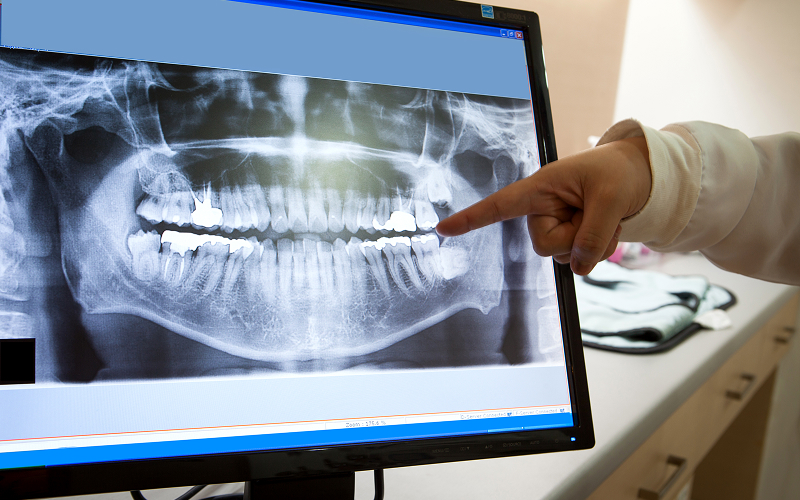
Wisdom teeth are the last adult teeth to emerge, so there may not be enough room at the back of the jaw for them to come through properly. When this happens, the wisdom tooth may remain partly or fully trapped beneath the gum or bone, often at an angle, which can cause pain and discomfort. This is known as impaction.
An impacted wisdom tooth may press against the tooth in front or create an area that is difficult to clean. Not every impacted tooth needs to be removed, but your dentist may recommend monitoring or treatment if it is affecting nearby teeth or is likely to cause problems over time.
2. Partial Eruption and Gum Flap Irritation
Some wisdom teeth only emerge partway through the gum. A small flap of gum tissue can then sit over part of the tooth, making it easy for food and bacteria to collect underneath. This can irritate the surrounding gum and cause inflammation, also known as pericoronitis. The area may settle after cleaning or treatment, but the problem can return if the tooth remains partly covered and difficult to maintain.
3. Tooth Decay in Hard-to-Reach Areas
Because wisdom teeth sit so far back in the mouth, they are often harder to brush and floss properly. Plaque can build up on the wisdom tooth itself or between it and the adjacent molar.
Over time, this can lead to decay, gum problems or damage to the neighbouring tooth. Depending on the tooth’s condition and position, your dentist may discuss whether it can be restored or whether tooth extraction would be the more practical long-term option.
When Should You See a Dentist for Wisdom Teeth Pain?
You should see a dentist if the wisdom teeth pain lasts more than a few days, keeps returning or starts to affect everyday activities such as eating, sleeping or concentrating at work. While mild discomfort can sometimes settle temporarily, recurring symptoms often mean that the tooth, surrounding gum or neighbouring molar needs to be assessed.
Arrange a dental consultation if you notice:
- Pain that is getting worse, not improving or keeps coming back
- Swelling around the gum, cheek or jaw
- Difficulty opening your mouth or increasing jaw stiffness
- A bad taste, discharge or persistent bad breath
- Pain when chewing or biting that makes eating difficult
- Food repeatedly getting trapped and causing irritation
- Pain that is interfering with sleep, eating or daily activities
You should seek prompt dental advice if swelling spreads to the cheek or jaw, you develop a fever or begin to feel generally unwell. Difficulty swallowing or breathing requires urgent medical attention, as this may indicate that an infection is spreading.
What Are Your Treatment Options for Wisdom Tooth Pain?
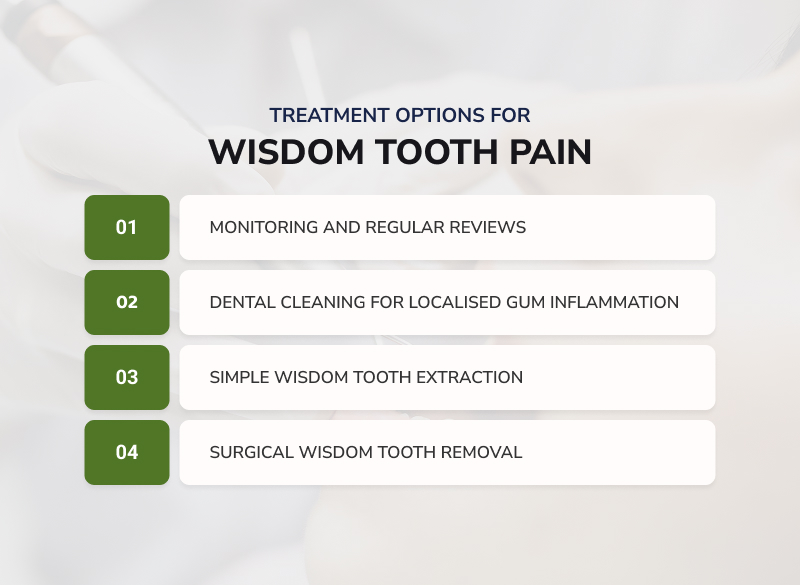
The right approach depends on what is causing the pain, where the wisdom teeth are positioned and whether they are affecting the surrounding teeth or gums. Your dentist will usually recommend treatment only when there is a clear reason to intervene, such as recurring infection, decay, damage to the neighbouring tooth or a wisdom tooth that cannot be kept clean.
Monitoring and Regular Reviews
If the wisdom tooth is healthy, fully erupted or easy to clean, and is not causing damage to the tooth beside it, your dentist may recommend monitoring it instead.
This usually involves checking the area during routine dental visits and taking X-rays when needed to review the tooth’s position, surrounding bone and neighbouring molar. Monitoring can be a suitable option when there are no ongoing symptoms or signs of disease, allowing treatment to be considered only if the situation changes.
Managing Localised Gum Inflammation
When the pain is caused by food trapping or inflammation around a partially erupted wisdom tooth, your dentist may clean and irrigate the area to remove trapped debris and then advise you on how to clean around the tooth at home.
Dental cleaning may help when inflammation is mild, and the tooth can still be accessed and maintained. However, if the same area becomes inflamed repeatedly, cannot be cleaned properly or continues to trap food, your dentist may discuss removal as the next step.
Simple Wisdom Tooth Extraction
A wisdom tooth extraction is generally suitable when the tooth has erupted fully and is visible in the mouth. Since the tooth can be accessed directly, your dentist may be able to remove it without opening the gum or removing surrounding bone.
This is often considered when a fully erupted wisdom tooth is affected by decay, gum problems or repeated irritation. The area is usually numbed with local anaesthesia, so you should not feel sharp pain during the procedure, although you may notice pressure or movement as the tooth is removed.
Surgical Wisdom Tooth Removal
Wisdom tooth surgery may be recommended when the tooth is partially erupted, trapped beneath the gum or bone, or positioned in a way that makes direct extraction difficult. This is commonly the case for impacted wisdom teeth.
To reach the tooth, the dentist may need to make a small opening in the gum and, where necessary, remove a small amount of surrounding bone. In some cases, the tooth may be divided into smaller sections before it is removed. This approach is planned carefully using X-rays to minimise disturbance to the surrounding tissues.
The procedure may be carried out by a dental surgeon, depending on the complexity of the tooth’s position, the shape of its roots and its proximity to nearby nerves.
How Dentists Choose a Suitable Option
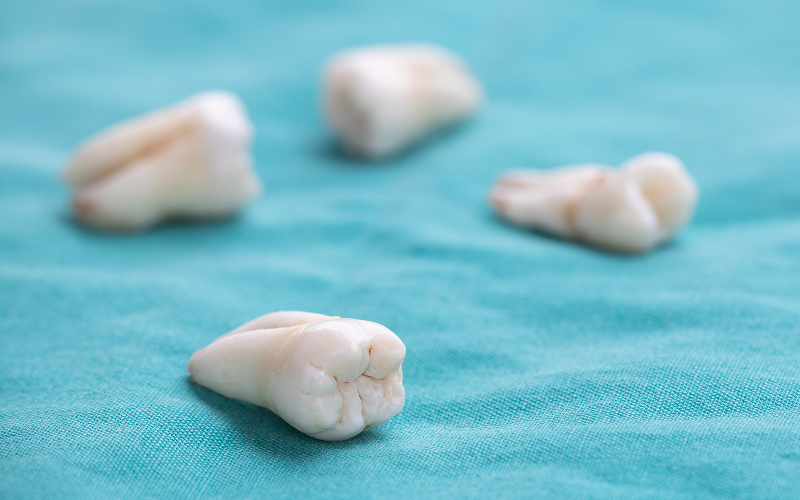
Treatment planning may take into account:
- Whether the tooth is fully erupted, partly erupted or impacted
- Its angle and depth within the jaw
- The condition of the surrounding gum and neighbouring molar
- Whether decay, infection or gum disease is present
- How easy the tooth will be to clean and monitor over time
- The shape of the roots and proximity to nearby nerves
- Your medical history, comfort level and practical considerations for recovery
A consultation can give you a clearer understanding of what is happening and allows you to decide, with your dentist, the most appropriate next step to address your wisdom teeth pain.
Frequently Asked Questions
1. Is wisdom teeth removal painful?
It is normal to feel concerned about discomfort before wisdom tooth removal. The area is usually numbed with local anaesthesia, so you should not feel sharp pain during the procedure, though you may notice some pressure or movement.
Afterwards, some soreness and swelling are common, especially if surgery is involved. Your dentist will explain what to expect and how to manage any discomfort, which can help make the experience feel more manageable.
2. How long does it take to recover after wisdom teeth removal?
Recovery time varies depending on whether the tooth was removed through a simple extraction or a surgical procedure, as well as your individual healing response. Some patients are able to return to their usual routine within a few days, while others may need a little more time for swelling, jaw stiffness or tenderness to settle.
3. Is wisdom tooth removal covered by Medisave in Singapore?
MediSave may be used for eligible surgical wisdom tooth removal in Singapore, subject to prevailing withdrawal limits and eligibility requirements. Whether a claim can be made depends on the type of procedure required, as MediSave generally applies to surgical dental treatment rather than a simple extraction.
As a CHAS and MediSave-accredited clinic, Elite Dental Group also offers other payment options, including interest-free instalment plans through major banks and selected dental or corporate insurance panels. During your consultation, our dentists will explain the estimated treatment fees, applicable subsidies and expected out-of-pocket costs to help you make an informed decision.
4. Can I leave wisdom tooth pain to go away on its own?
Wisdom tooth pain can sometimes settle temporarily. However, this does not always mean that the underlying issue has been resolved. Problems such as a partially erupted tooth, trapped food, or pressure on the adjacent molar can persist even when the pain is no longer noticeable.
Rather than waiting through repeated flare-ups, arrange a dental review if the discomfort returns or becomes more disruptive. An examination can clarify whether the tooth simply needs monitoring or whether there is an issue that should be addressed.
Conclusion
Experiencing pain can be worrying, especially if the wisdom teeth may be involved. You may be concerned about what treatment could involve, how long recovery might take or whether you have left it too late. The good news is that a dental assessment can give you clarity. By understanding what is causing the discomfort, you can make a considered decision about whether to monitor the tooth or address it before it further affects your daily life.
At Elite Dental Group, we understand that wisdom tooth treatment can feel daunting, especially for patients with dental anxiety or phobia. Our team takes the time to explain each step, address your concerns, and plan treatment around your comfort. Surgical cases are supported by 3D CBCT imaging and AI-powered digital software for planning, while a full range of sedation options, from IV sedation to general anaesthesia, may be considered based on your needs and clinical suitability.
Arrange a consultation with our team to discuss your options today.
 Elite Dental Group