Key Takeaways
- Dental implants are not a one-size-fits-all solution; different implant types are used depending on bone support, tooth position, and overall oral health.
- Conventional, short or narrow, zygomatic, and full-arch implants each serve different clinical needs.
- Choosing the right implant involves careful assessment of bone quality, bite forces, and long-term maintenance considerations.
- Implant treatment costs in Singapore vary based on case complexity, the number of implants, and whether additional procedures are required.

Dental implants are a common solution for replacing missing teeth when long-term stability and comfort are priorities. Rather than sitting on the gums, implants are anchored into bone, allowing them to function much like natural tooth roots. However, not all dental implants are the same. Different tooth replacement options are used depending on bone structure, the number of missing teeth, and each patient’s long-term needs.
Below, we take a closer look at the different types of dental implants and how dentists determine which option is appropriate for you.
The Different Types of Dental Implants Available
1. Conventional Endosteal Dental Implants
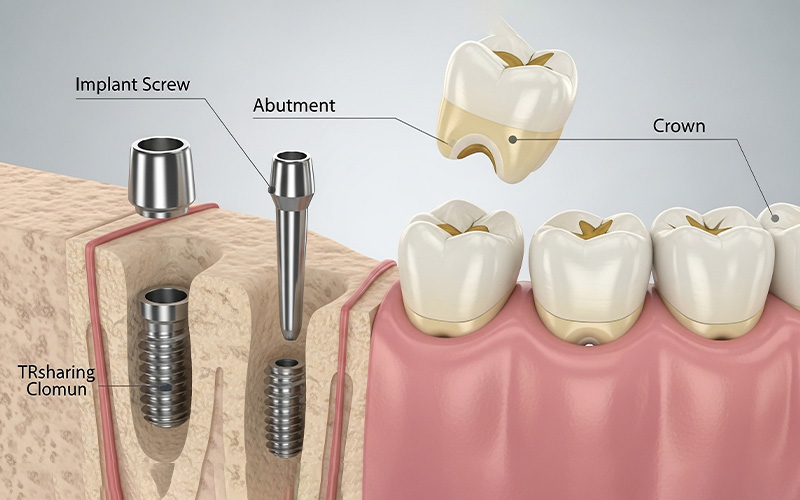
Conventional endosteal implants are commonly used in implant dentistry. A small titanium implant is placed into the jawbone, where it gradually bonds with the bone through a natural healing process known as osseointegration. Once this bond is established, the implant functions as a stable artificial tooth root, providing support for a crown, bridge, or denture that restores everyday function and appearance.
However, conventional endosteal implants require sufficient jawbone support, which means some patients may need bone grafting before placement. Additional healing time is also required to allow the implant to integrate fully with the bone before the final restoration can be placed.
Typically Recommended For:
- Patients with adequate jawbone volume and density
- Individuals with healthy gums and good overall oral health
- Patients replacing one or several missing teeth
- Those seeking a long-term, fixed solution that closely mimics natural teeth
2. Short and Narrow Dental Implants
Short and narrow implants are designed for situations where bone height or width is limited. These implants have a reduced diameter or length compared to conventional implants, allowing them to be placed in areas where standard implants may not be suitable.
Narrow-diameter implants are categorised into three groups:
- Category 1: Under 2.5 mm, often referred to as mini-implants
- Category 2: Between 2.5 and 3.25 mm
- Category 3: Between 3.3 and 3.5 mm
However, due to their reduced surface area, these implants can be more sensitive to bite forces. Careful planning is required to ensure forces are distributed appropriately, as long-term outcomes may be less predictable than with standard implants.
Typically Recommended For:
- Patients with reduced bone height or width
- Individuals who wish to avoid extensive bone grafting where possible
- Areas with limited space between adjacent teeth
- Selected cases where bite forces can be carefully managed
3. Zygomatic and Alternative Anchor Implants
Zygomatic implants are used in more complex implant cases, particularly in the upper jaw, where there is significant bone loss. Instead of being anchored in the jawbone, these implants use the cheekbone for stability.
This approach allows some patients with severe bone deficiency to receive fixed implant-supported teeth without undergoing bone grafting procedures. Placement requires the use of imaging and surgical planning to ensure the implants are placed correctly and well supported.
It is also important to note that zygomatic implants are not part of routine implant treatment and are usually considered only when conventional options are not suitable.
Typically Recommended For:
- Patients with severe bone loss in the upper jaw
- Individuals who are not suitable for conventional implants due to bone limitations
- Complex cases requiring detailed implant planning
4. Implant-Supported Full-Arch Solutions
Implant-supported full-arch solutions are designed to replace an entire row of teeth rather than individual teeth. Multiple implants are placed at carefully planned positions and angles to support a fixed set of replacement teeth.
This approach provides greater stability than removable dentures and can help improve chewing ability, speech, and overall comfort. The replacement teeth are fixed in place, reducing movement during daily activities.
Typically Recommended For:
- Patients missing most or all teeth in one jaw
- Individuals experiencing difficulty with loose or uncomfortable dentures
- Patients seeking a fixed, non-removable tooth replacement solution
How Do Dentists Decide Which Types of Dental Implants Are Suitable?
To choose a dental implant that is appropriate for your needs, your dentist will assess a combination of clinical findings and functional needs:
- Bone Quality and Volume: The height, width, and density of the jawbone influence whether a conventional implant can be placed or whether alternative options, such as shorter, narrower, or specialised implants, may be more appropriate.
- Location and Number of Missing Teeth: Replacing a single tooth places different demands on an implant compared to supporting multiple teeth or a full arch. Areas that experience higher bite forces may also require careful planning to ensure long-term stability.
- How a Patient Bites and Chews: Bite forces, jaw alignment, and habits such as teeth grinding can affect implant selection and positioning. Proper force distribution helps reduce stress on the implant and surrounding bone over time.
How Much Do Dental Implants Cost in Singapore?
The cost of dental implants varies depending on treatment complexity and the type of implant solution recommended. While the average cost in Singapore is around $4,000–$6,000 for a single-tooth implant, this can vary based on individual clinical needs and factors. This includes:
- The type and number of implants required
- Whether additional procedures, such as bone grafting or sinus lifting, are needed
- The type of restoration placed on the implant, including crowns, bridges, or full-arch prostheses
- The level of planning involved, including imaging and surgical considerations
Dental implants are typically not claimable under MediSave, and CHAS subsidies are limited. As such, clear upfront discussions about treatment scope, timelines, and costs are an important part of the consultation, helping patients decide whether the type of implant they choose aligns with their clinical needs and budget.
Conclusion
Understanding the different types of dental implants can help patients feel more confident at the dentist. Each implant option serves a specific purpose, and taking the time to explore these differences can support more informed choices based on your needs and treatment goals.
At Elite Dental Group, a dental clinic in Orchard, all implant surgeries are supported by plasma activation to promote healing and reduce the risk of complications. For more complex cases, care is coordinated through a multidisciplinary approach involving a dental implant surgeon, periodontist, and prosthodontist, with additional support from medical doctors and anaesthetists where appropriate.
For patients who may feel anxious about treatment, IV sedation and general anaesthesia options are available. Surgical planning and execution are also guided by a full digital workflow, using specialised software, customised 3D printing, and artificial intelligence (AI) to support treatment.
To arrange a complimentary 5–10 minute teleconsult or book an in-clinic appointment, contact us today.
 Elite Dental Group