Smile Makeover
A personalised combination of cosmetic treatments designed to improve the appearance of your smile.
Home > Smile Makeover
What Is a Smile Makeover?
A smile makeover is not a single procedure but a customised plan that may include one or more forms of cosmetic dentistry. These can involve:
- Dental veneers or crowns to help alter the appearance of teeth
- Clear aligners or braces for orthodontic alignment
- Teeth whitening for managing stains
- Gum contouring to adjust your gum-to-tooth balance
- Dental implants to replace missing teeth
Digital Smile Design at Elite Dental Group
At Elite Dental Group, we use Digital Smile Design (DSD), a planning system that helps visualise and design a proposed smile before correction treatment begins. This system creates a virtual model of the teeth and transfers this design into the patient’s mouth for evaluation.
How Does Digital Smile Design Work?
- Photographs, X-rays, and digital scans of the teeth are taken.
- A 2D design of the proposed smile is created and converted into a 3D prototype.
- The 3D model is transferred over the existing teeth, allowing both patient and dentist to preview the design. This stage is often called a trial smile.
- If adjustments are needed, the prototype can be modified, and the process is repeated until an agreed design is reached.
Once approved, the prototype serves as a guide for the final smile makeover plan.
Who is Suitable for Digital Smile Design?
DSD may be suitable for individuals considering significant changes to their smile. It can be used in treatment planning for orthodontics (braces or aligners), implant-supported restorations in the front teeth, and dentures.
What to Expect from a Smile Makeover Cosmetic Dentistry Procedure
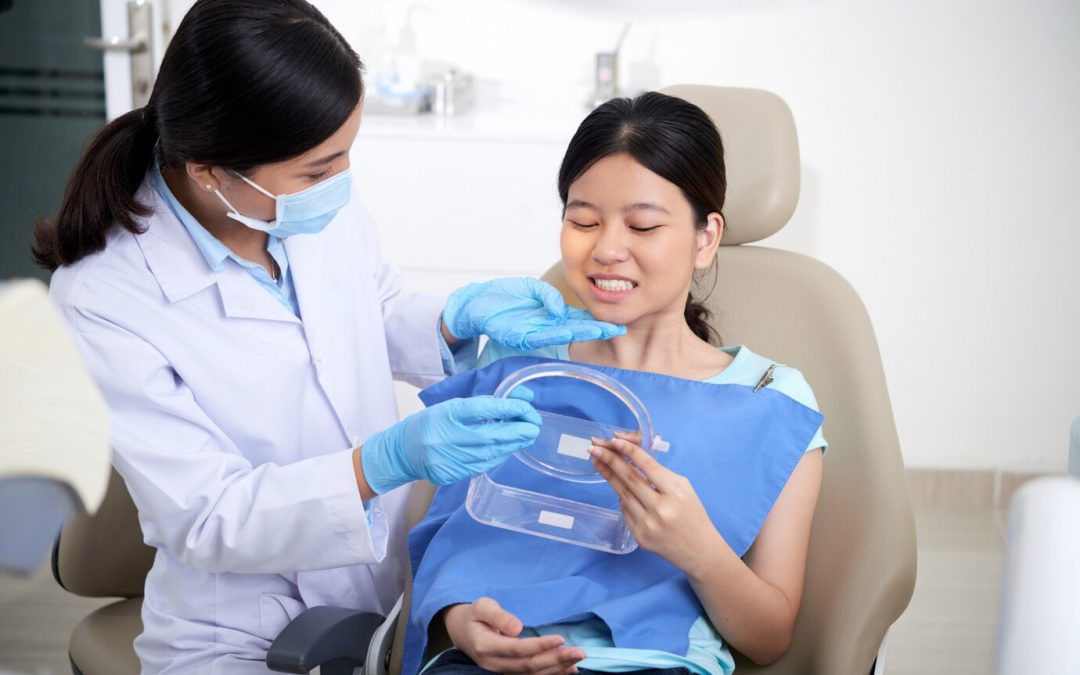
Here is an overview of what to expect during your smile correction treatment with Elite Dental Group.
1st Visit: Dental Assessment
The first appointment involves a thorough examination to ensure your teeth and gums are healthy enough for cosmetic treatment. Your dentist will assess overall oral health, tooth structure, bite alignment, and jaw joint function, as well as identify any underlying issues that need to be addressed before treatment.
2nd Visit: Consultation & DSD Creation
During the second visit, your dentist will discuss your goals and preferences in detail. Photographs, X-rays, and 3D digital scans are collected to assist with smile correction treatment planning.
You will also take part in a patient input session to share your preferences for tooth shape, proportions, and overall appearance. Using this information, your dentist will use the AI-assisted Digital Smile Design (DSD) software to generate customised design options.
3rd Visit: Smile Design Presentation & Trial Smile Fitting
At the third appointment, your dentist will present the proposed design options created by the DSD system and explain how each design may affect function and appearance. Temporary mock-ups are then created based on your preferred design and fitted over your existing teeth.
This “trial smile” allows both you and your dentist to assess how the proposed restorations look, feel, and function in your mouth.
4th Visit: Final Approval & Tooth Preparation
Once you are satisfied with the trial smile, the design is confirmed. The dentist then prepares the teeth using minimally invasive techniques, followed by digital scanning or impressions for the final restorations.
Temporary restorations are placed to protect your teeth while the permanent ones are being fabricated.
5th Visit: Placement of Final Restorations
During this visit, the temporary restorations are removed and the teeth are cleaned. The porcelain crowns or veneers are carefully fitted and assessed.
Once approved, they are permanently cemented in place using bonding techniques. Your dentist will also perform an initial bite check and provide guidance on post-treatment care and dietary considerations.
6th Visit: Final Review & Maintenance
The final appointment includes a comprehensive review of the completed smile makeover. If required, minor bite adjustments are made. The restorations are polished for a smooth finish, and your dentist will provide instructions on long-term care and maintenance.
Follow-up appointments are scheduled to monitor oral health and ensure the restorations continue to function as intended.
How Much Does a Smile Makeover Cost in Singapore?
The cost of a smile makeover in Singapore depends on the treatments chosen.
Financing Options for Smile Correction Treatment
Major Banks
We accept interest-free instalment payments from all major banks.
Buy Now Pay Later (BNPL)
We have existing collaborations with BNPL platforms, like Atome and PayLater, to help finance your dental treatments.
Dental and Corporate Insurance
We are on multiple dental and corporate insurance panels to provide more accessible dental care to you.
How Long Does a Smile Makeover Take?
The length of a smile makeover depends on the type and number of procedures involved, as well as your oral condition. Some treatments, such as teeth whitening or composite bonding, may be completed in as few as two visits. However, more comprehensive procedures, like orthodontic treatment with braces or clear aligners, may take several months.
Our Approach to Smile Correction Treatment
At Elite Dental Group, we use digital planning tools and structured treatment processes to guide each stage of a smile makeover. The clinic follows strict safety protocols to ensure that procedures are carried out in a professional and sanitary environment.
Unlike non-licensed providers of cosmetic services, Elite Dental Group offers care within a regulated dental setting, where long-term oral health remains the priority alongside aesthetic considerations.
Topics About Smile Makeover Treatment
Click on the links below to learn more about smile makeovers.
Frequently Asked Questions
about Getting a Smile Makeover in Singapore
Got questions? We’ve got answers! Check out our FAQ section for common inquiries and helpful information to guide you.
What age is suitable for a smile makeover?
There is no specific “best” age for a smile makeover. The right time depends on your oral health, goals, and stage of dental development.
For younger patients, most dentists recommend waiting until the late teens or early twenties, when facial growth is complete and permanent teeth are fully developed. This ensures more stable and lasting results.
For adults, there is no upper age limit as long as oral health and gum condition are stable. Many people choose smile makeovers in their 30s, 40s, or 50s to refresh their appearance or improve function.
The ideal timing varies for each person. A consultation with a cosmetic dentist can help determine the most suitable approach based on your age, oral health, and treatment goals.
Is a smile makeover permanent?
A smile makeover is not permanent, but many of its results can last for many years with proper care. Longevity depends on the specific procedures performed and how well you maintain your oral health.
For example:
- Teeth whitening may require periodic touch-ups
- Veneers and crowns can last 10–15 years or more with good care
- Dental implants can last many years when maintained properly
- Bonding may need occasional refinishing or replacement
- Orthodontic results require consistent retainer use
To extend the lifespan of your results, practise good oral hygiene, attend regular dental check-ups, and avoid habits such as grinding or biting hard objects.
What is the difference between smile correction treatment by a dentist and a plastic surgeon?
A dentist and a plastic surgeon play different roles in improving a person’s appearance.
- Dentists, particularly those trained in cosmetic and restorative dentistry, focus on teeth, gums, and bite alignment. They use treatments such as veneers, bonding, crowns, orthodontics, and implants to enhance both the function and aesthetics of your smile.
- Plastic surgeons focus on facial structure and soft tissues, addressing aspects such as the lips, cheeks, or jawline through procedures like lip lifts, chin augmentation, or facelifts. These can influence how the smile appears within the overall facial context, but they do not treat teeth directly.
In some cases, collaboration between a dentist and plastic surgeon may be beneficial when both dental and facial changes are desired for a balanced result.
Are smile makeovers safe?
When carried out by a qualified and experienced dentist, smile makeover procedures are generally safe. As with any dental or medical procedure, safety depends on:
- The specific treatments performed
- The technique and experience of the dentist
- The patient’s overall oral and medical health
Common cosmetic treatments like whitening and bonding are minimally invasive and have a lower risk. More advanced procedures, such as veneers, crowns, or implants, may require minor alteration to tooth structure or surgery, but are considered safe when done correctly.
Possible side effects include temporary sensitivity, mild gum irritation, or, rarely, infection. Your dentist will conduct a thorough assessment before treatment to ensure your suitability and explain the potential risks and benefits.
Who is a good candidate for a smile makeover?
A smile makeover may be suitable for individuals who:
- Has healthy gums and no active gum disease
- Does not have untreated decay or infection
- Maintains good oral hygiene habits
- Has realistic expectations about outcomes
- Is committed to following care instructions and attending regular check-ups
Patients who smoke or have uncontrolled health conditions may need to address these issues before starting treatment. Ultimately, the best candidates are those who are motivated to improve their smile and are willing to invest time and resources into achieving and maintaining their desired results.
How many veneers are needed for a smile makeover?
The number of veneers needed varies based on your smile width, goals, and existing tooth condition.
- For most patients, veneers are applied to the front six to eight upper teeth—the ones most visible when smiling (the “social six” or “social eight”).
- Some may require 10–12 veneers on the upper arch for a more uniform look.
- In more comprehensive makeovers, veneers may also be placed on the lower teeth, particularly if they are visible when speaking or smiling.
Your dentist will recommend the appropriate number after assessing your smile line, facial proportions, and desired outcome. The goal is always a natural, balanced result, not necessarily the most veneers.
What is the difference between a mini and a full smile makeover?
The main difference lies in the scope and number of treatments involved.
- A mini makeover focuses on minor adjustments, such as whitening, bonding, or a few veneers, to enhance your existing smile. It’s less invasive, faster, and more cost-effective, ideal for addressing small imperfections.
- A total smile makeover is more comprehensive, combining multiple procedures such as veneers, crowns, orthodontics, gum reshaping, or implants. It is designed to transform the entire smile, addressing both functional and aesthetic concerns.
Is a smile makeover worth it?
Whether a smile makeover is worthwhile depends on each individual’s circumstances, treatment goals, and expectations. For some, the main motivation may be aesthetic changes, while others may seek functional benefits such as improved bite alignment or easier maintenance of oral hygiene.
Ultimately, the decision should be made with realistic expectations and after a detailed consultation. Your dentist can explain which treatment options are suitable, what results may be expected, and the costs involved.
HOW CAN WE
HELP?
Heading to a dental clinic can be a scary and almost overwhelming experience. If you have landed on our website, we would like to extend our warmest welcome to you and your family. There is nothing to fear!
If you require more information about our costs or are looking for ways to save money on dental treatments, arrange for a consultation with our dentists at a time of your convenience.
Related Dentistry Services
Click To Find Out More
Dental Implant
A long-term solution for replacing missing teeth. Dental implants restore function and appearance by anchoring a replacement tooth securely into the jawbone.
Click To Find Out More
All-on-4 Implants
A full-arch tooth replacement option supported by four implants. Suitable for patients with extensive tooth loss who want a fixed and stable smile.
Click To Find Out More
Wisdom Tooth Removal
Removal of impacted or problematic wisdom teeth to help relieve pain, prevent infection, and protect surrounding teeth.
Click To Find Out More
Root Canal Treatments
Treatment for infected or inflamed tooth pulp. Root canal therapy helps save the natural tooth while helping to relive pain and prevent further complications.
Click To Find Out More
Dental Fillings
Used to repair teeth affected by decay, wear, or minor fractures. Dental fillings restore the tooth’s structure and function while helping to prevent further damage or sensitivity.
Click To Find Out More
Tooth Extraction
Removal of severely damaged or decayed teeth when preservation is no longer possible.
Click To Find Out More
Mercury Fillings Removal
Removal and replacement of old amalgam (mercury) fillings with modern tooth-coloured materials. This helps restore aesthetics and supports a more uniform, natural-looking smile.
Click To Find Out More
Dental Crown
A protective cap placed over a weakened or heavily restored tooth. Dental crowns help restore tooth strength, function, and natural appearance.
Click To Find Out More
Dental Veneers
Thin custom-made shells bonded to the front surface of teeth to improve shape, colour, and alignment. Commonly used to enhance smile aesthetics while preserving as much natural tooth structure as possible.
 Elite Dental Group