Teeth whitening
What is Zoom Teeth Whitening?
Zoom Teeth Whitening is a clinic-based LED light-assisted chemical bleaching performed by our dental team to lighten the natural colour of your teeth.
This process only works on natural teeth and will not lighten existing fillings, veneers or crowns. Although there is no one top whitening brand for teeth whitening, Elite Dental Group prefers the Philips Zoom teeth whitening brand as it has been clinically tested to be safer and more effective than most other brands.

What causes tooth discoloration?
Tooth discolouration may be caused by external stains from smoking and the consumption of coffee, tea, red wine, soy sauce or dark-coloured fruit juices. Ageing also causes your teeth to slowly yellow over time as the enamel layer wears down.
Other sources of tooth discolouration are internal, such as tetracycline antibiotic staining, dental decay, enamel defects, leaking amalgam fillings or necrotic pulp stains (in a dead/root canal-treated tooth). These may not respond that well to Zoom and other treatment options may be more suitable in order to achieve the desired result.
Is Zoom teeth whitening safe?
The bleaching gel and the activation light have been assessed to be safe by various global regulatory bodies (USFDA, CE, Health Sciences Authority of Singapore) when used under the supervision of a licenced dental professional.
It is a myth that the bleaching gel is able to erode tooth enamel because the optimal pH for bleaching is neutral to slightly alkaline.
Is Zoom teeth whitening suitable for me?
Your dentist will be able to advise you on whether Zoom teeth whitening would be suitable for your case.
Patients are free to request certain types of treatment in the belief that the treatment will benefit them. However, a consultation is required to determine if Zoom whitening (or any other treatment for that matter) will suit a particular patient and what they hope to achieve.
Zoom is not advised for patients below 18 years old and for pregnant women.
How is Zoom teeth whitening done at Elite Dental?
Step 1: Consultation
A thorough examination is required to assess if you are suitable for the Zoom whitening treatment. The bleaching gel should not be applied on decayed teeth/open cavities, around inflamed gums, or on extremely worn teeth. So these conditions should be treated first, before the whitening can be done safely.
We will advise you on how much your teeth will lighten with Zoom and maintenance instructions will also be given to help you keep your smile as bright for as long as possible.
Custom teeth whitening trays can also be made so that it is easy to maintain the whiteness of teeth at home, with a lower concentration whitening gel.
Your starting teeth shade will be recorded.
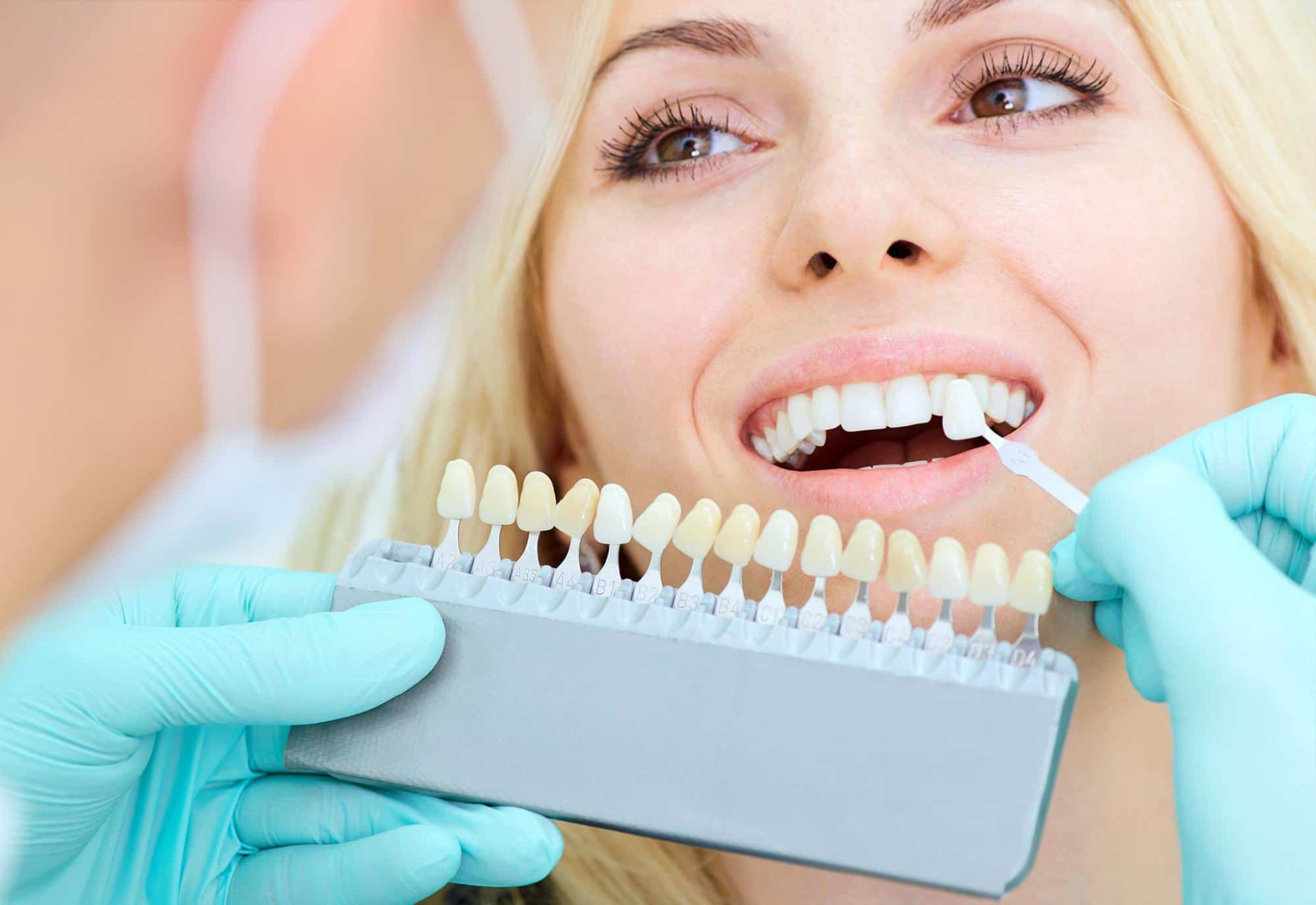
Step 2: Preparing your Teeth
Your teeth will be carefully cleaned to remove plaque and debris. A protective gel barrier is applied to the gum margins and the rest of the soft tissues are covered to prevent irritation from the Zoom lamp and the bleaching gel.
This allows us to use the maximum strength of hydrogen peroxide bleaching gel (25%), which is only available to licensed dental professionals.
In some cases, you may also be given an oral painkiller to reduce sensitivity during the procedure.
Step 3: Zoom Whitening Procedure
After applying the bleaching gel onto your teeth, a strong LED light is used to accelerate the chemical bleaching process. As the bleaching gel is exposed to the light, it breaks down stain molecules within the tooth structure into colourless compounds. The depleted gel is removed and fresh gel is reapplied at the start of each 15 min cycle. 2-4 consecutive cycles of 15 minutes are normally required.
Step 4: Whitening Complete!
The bleaching gel and barrier material will be removed at the end of the procedure.
Some patients experience increased tooth sensitivity after Zoom. A desensitizing gel and desensitizing toothpaste is recommended for the first 1-2 days after Zoom, and we will instruct you on how best to apply these to your sensitive teeth.
IMPORTANT: Avoid exposing your teeth to coloured cosmetics (lipstick/lip balm), coloured food and beverages for the first 48 hours.
Your dentist may review your bleaching after 1-2 weeks to assess the final shade. It is normal to experience some fading after Zoom as your teeth rehydrate.
Some patients also have bleaching trays made for 3 monthly top ups using home bleaching gel.
Will the results of Zoom teeth whitening last forever?
As we age, our teeth get darker and this is a part of the natural ageing process. Doing top-up whitening sessions (in clinic or at home) is recommended to maintain the brightness of your smile.
Is teeth whitening done at a salon by a beautician just as effective?
In recent years, provision of aesthetic dental treatment (teeth whitening, veneers, braces) by non-dental professionals has increased. Therapists and beauticians operating out of salons, spas, beauty parlors and some even from their own homes, offer such treatment. These providers offer what seems to be the same treatments as those performed by licensed dentists at a much lower fee, promising similar results.
The short answer is, whitening or other dental procedures not carried out by licensed dental professionals is done at your own risk. There is no guarantee of predictable success and there is an increased risk of material harm (from unlicensed bleaching chemicals being used in your mouth and soft tissue burns). You will have no recourse should the procedure go awry.
Frequently
Asked
Questions
Got questions? We’ve got answers! Check out our FAQ section for common inquiries and helpful information to guide you.
What is teeth whitening?
Teeth whitening (also called bleaching) is a cosmetic dental procedure that uses chemical agents to lighten the color of discolored or stained teeth. The most common whitening agents are hydrogen peroxide and carbamide peroxide, which work by breaking down stain-causing molecules in the tooth structure through an oxidation process. Teeth can become discolored due to aging, dietary choices (coffee, tea, red wine), tobacco use, certain medications, or dental trauma.
Whitening can be performed professionally in a dental office, at home under dentist supervision using custom trays, or through over-the-counter products like whitening strips, toothpastes, and mouth rinses.
How effective is teeth whitening?
All professional bleaching methods are effective at whitening teeth, with studies showing significant color improvement compared to placebo. Both in-office and at-home bleaching produce similar overall color changes, though the timeline differs—in-office treatment works faster while at-home treatment is more gradual. Clinical studies show that whitening can lighten teeth by 2-8 shade guide units on average.
Combined in-office and at-home bleaching may produce the most pronounced color improvement, particularly in the first few weeks. Among over-the-counter products, whitening strips containing hydrogen peroxide have the strongest clinical evidence for effectiveness, while the evidence for whitening toothpastes and mouth rinses relies mainly on laboratory studies. The effectiveness can vary based on the type and severity of tooth discoloration, with extrinsic stains (surface stains) responding better than intrinsic stains (internal discoloration).
How long do teeth whitening results last?
Teeth whitening results typically remain stable for 1 to 2.5 years, though some color rebound occurs gradually over time.
The longevity of results depends on several factors, including the severity of the original discoloration (severe stains tend to recur more quickly), lifestyle habits (smoking, coffee, tea, and red wine consumption accelerate color rebound), and the type of whitening performed. Combined in-office and at-home treatments may provide longer-lasting results than in-office treatment alone. Periodic touch-up treatments can help maintain the desired shade over time.
Is teeth whitening safe?
When used properly under professional supervision, peroxide-based teeth whitening is safe and effective, with over a century of clinical use. The most common side effects are tooth sensitivity and gingival (gum) irritation, which are usually mild to moderate and temporary, resolving within days to weeks after treatment ends. There is no evidence of significant long-term health risks associated with properly administered tooth whitening.
However, potential adverse effects can occur with inappropriate application, excessive use, or use of unsuitable products. Bleaching agents can cause temporary changes to tooth structure, including increased enamel permeability and surface roughness, though these effects are generally reversible. Higher concentrations of bleaching agents are associated with greater risk of side effects, particularly tooth sensitivity. Professional supervision helps ensure safe and effective treatment tailored to individual needs.
What causes tooth sensitivity during whitening?
Tooth sensitivity during whitening occurs when hydrogen peroxide penetrates through enamel and dentin to reach the dental pulp, causing oxidative stress and triggering pain receptors. The bleaching agents increase intracellular reactive oxygen species (ROS) in pulp cells, leading to inflammation and activation of pain-conducting molecules. This process causes the characteristic sharp, temporary pain that many patients experience during and shortly after whitening treatment.
Sensitivity is typically most intense during the first few days of treatment and usually resolves within days to weeks after treatment completion. Factors that increase sensitivity risk include higher bleaching concentrations, longer application times, pre-existing tooth sensitivity, exposed dentin, enamel defects, and gum recession. Lower concentration products used for shorter durations tend to cause less sensitivity.
HOW CAN WE
HELP?
Heading to a dental clinic can be a scary and almost overwhelming experience. If you have landed on our website, we would like to extend our warmest welcome to you and your family. There is nothing to fear!
If you require more information about our costs or are looking for ways to save money on dental treatments, arrange for a consultation with our dentists at a time of your convenience.