Dental Sealants
What are dental sealants?
Dental sealants, also known as pit/fissure sealants, are thin resin coatings used to seal over the pits and fissures and grooves of your teeth to prevent decay from developing in these areas of your tooth. These areas are usually on the biting surfaces of your molar teeth. Sealants may be white or tooth-coloured.
Why are dental sealants beneficial?
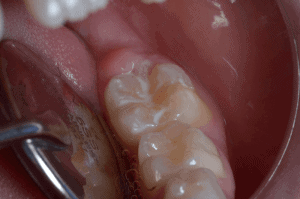
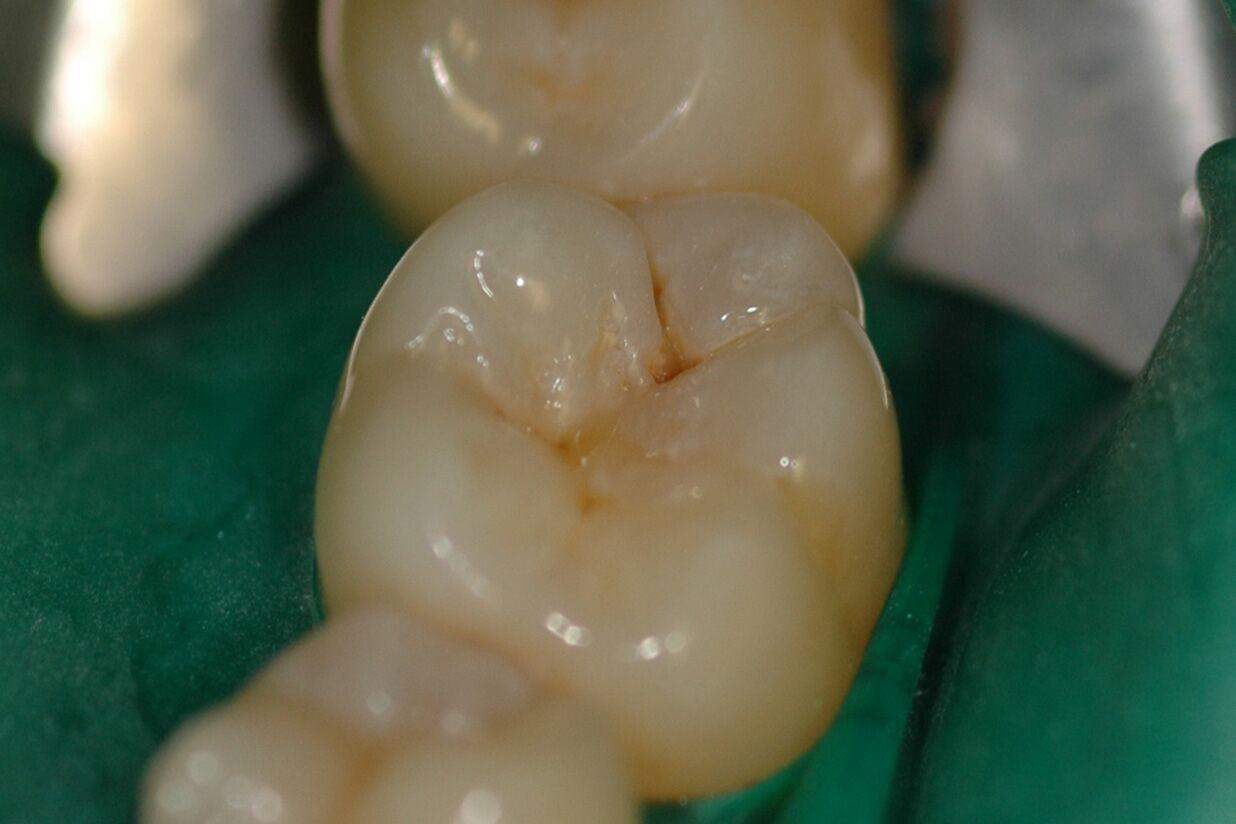
The enamel surfaces of your teeth have grooves (fissures) and pits that develop while the tooth is forming. These fissures may be very deep and can be extremely difficult to clean. When food particles and bacteria accumulate in the fissures, a cavity may form over time. When a sealant is placed, these pits and fissures are isolated from harmful bacteria creating a smooth surface that is easily cleaned.
The process of cleaning out these fissures may also uncover incipient decay in its early stages. This early fissure decay may not be detected on dental xrays. Getting a fissure sealant early can halt the decay process.
Elite Dental Group uses BPA-free dental sealants. BPA is an endocrine disruptor that may affect the endocrine and reproductive systems in pregnant or nursing mothers and young children.
Who would benefit from getting dental sealants done?
- Teenagers and Adults with deep bacteria stained fissures in their permanent teeth
- Young children and teenagers and adults who are prone to decay
Dental Sealants at Elite Dental Group
Step 1: Examination
We will examine your teeth and go over your dental history (for eg: previous treatments, previous fillings). We will then advise you on whether or not you would benefit from sealants in your case.
Step 2: Preparing your tooth
First, we will open up the fissures to clean out stains and bacteria. The fissures and the surrounding tooth surface is also cleaned of plaque. Then, your tooth is isolated from saliva. A chemical etchant is applied to microscopically roughen the enamel surface. This is rinsed off and your tooth is then dried carefully.
Step 3: Applying the sealants
A thin layer of adhesive is applied to the dry tooth surface followed by the sealant. A strong blue LED light is used to harden the sealant and bond it to the enamel. The new sealant is checked to ensure that it does not interfere with your bite. The sealed surfaces are then polished.
Do note that dental sealants are also subjected to wear and tear and they need to be replaced from time to time.
Frequently
Asked
Questions
Got questions? We’ve got answers! Check out our FAQ section for common inquiries and helpful information to guide you.
What are dental sealants?
Dental sealants are thin plastic coatings applied to the chewing surfaces of back teeth to prevent tooth decay. Sealants act as a physical barrier that prevents food debris and bacteria from accumulating in the deep grooves (pits and fissures) of teeth, where decay most commonly occurs in children and adolescents. The material is painted onto the tooth surface where it bonds directly to the tooth and hardens, creating a protective shield over the enamel.
Sealants were introduced in the 1960s and have become a cornerstone of preventive dentistry, particularly for children and adolescents whose newly erupted permanent molars are most vulnerable to decay.
Who should get dental sealants?
Sealants are particularly beneficial for individuals at moderate to high risk of developing cavities across all age groups. In Singapore, where dental caries remains a significant concern, sealants can play an important role in prevention.
While traditionally used on newly erupted permanent teeth in children and adolescents, sealants are effective in adults and older patients who have sound tooth surfaces with anatomically deep pits and fissures susceptible to decay.
How effective are dental sealants at preventing cavities?
Resin-based sealants are highly effective, reducing cavities by 11% to 51% compared to no sealant at 24 months. At 24 months follow-up, if 40% of unsealed teeth would develop cavities (400 per 1000 teeth), applying resin-based sealants would reduce this to just 6.25% (about 63 cavities per 1000 teeth).
The caries-preventive effect is maintained over longer periods. Studies show sealants continue to prevent decay at 48 to 54 months of follow-up, though the quantity and quality of evidence decreases with longer observation periods. The effectiveness depends partly on sealant retention, teeth with fully or partially retained sealants remain better protected against decay.
What types of sealant materials are available?
Two main types of sealant materials are used:
Resin-based sealants are the most commonly used and include light-polymerizing (cured with a special light) and auto-polymerizing (self-hardening) materials. These are considered the reference standard for pit and fissure sealants. Light-polymerizing resin sealants are preferred in daily dental practice due to faster and less error-prone application.
Glass ionomer-based sealants include conventional glass ionomer and resin-modified glass ionomer materials. These materials release fluoride, which may provide additional caries protection. Glass ionomer sealants may be particularly useful in situations where moisture control is difficult, such as in partially erupted teeth.
How long do dental sealants last?
Sealant retention varies by material type and time. For resin-based sealants, studies show that approximately 56% to 68% remain fully retained at 2 years, and about 56% to 84% are fully or partially retained at 3 years. Auto-polymerizing and light-polymerizing resin sealants demonstrate the highest retention rates, with 5-year retention rates of approximately 65% to 84%.
Glass ionomer sealants generally have lower retention rates compared to resin-based sealants, with studies showing they have approximately 5 times greater risk of complete loss from the tooth after 2 to 3 years. However, even partially retained or lost glass ionomer sealants may provide some caries-preventive benefit through fluoride release.
Regular dental check-ups allow us to monitor sealant retention and reapply them if necessary to maintain protection.
HOW CAN WE
HELP?
Heading to a dental clinic can be a scary and almost overwhelming experience. If you have landed on our website, we would like to extend our warmest welcome to you and your family. There is nothing to fear!
If you require more information about our costs or are looking for ways to save money on dental treatments, arrange for a consultation with our dentists at a time of your convenience.
 Elite Dental Group