Dental Bridges
What is a Dental Bridge?
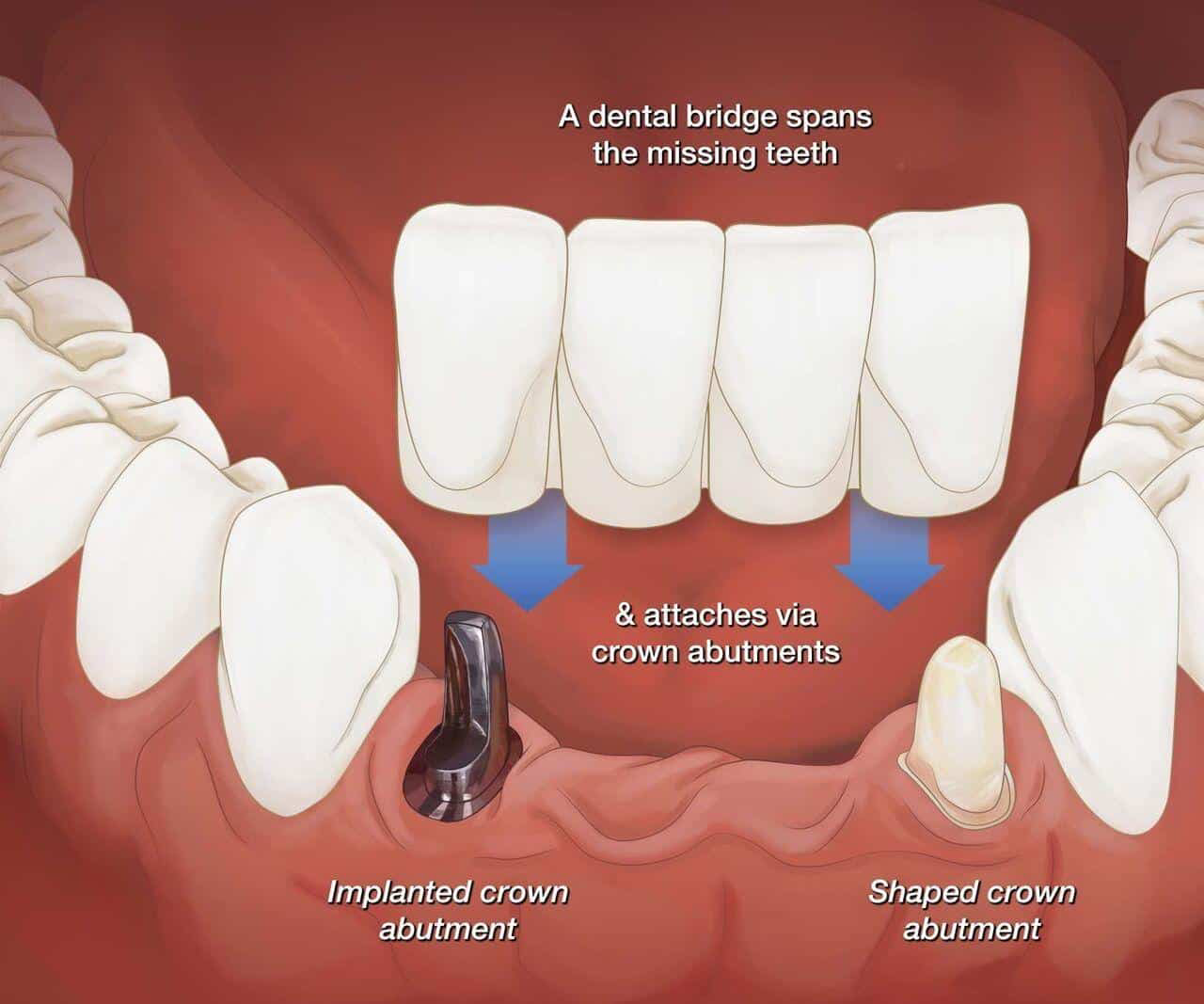
A dental bridge is an artificial tooth replacement that is attached on to existing teeth or implants. A dental bridge is commonly used to fill in a space where one or more teeth are missing.
When do I need a dental bridge?
A dental bridge is an alternative to a denture or an implant that replaces a missing tooth/teeth.
Leaving a missing tooth gap may cause your remaining teeth to shift.
Are there different types of dental bridges?
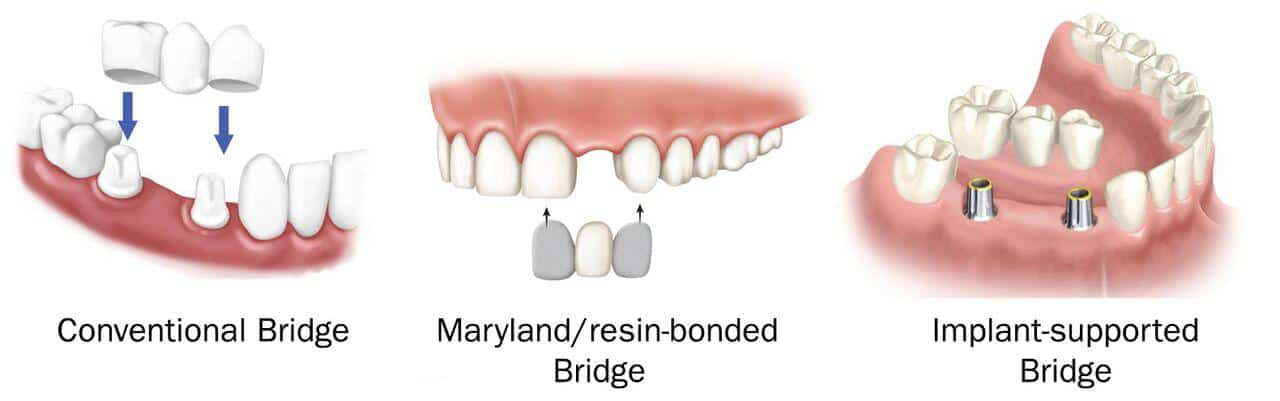
Here are the 3 most common types of dental bridges:
- Conventional (full-coverage) dental bridges
- Maryland/resin-bonded (partial coverage) dental bridges
- Implant-supported dental bridges.
We work with talented ceramic artists to recreate natural-looking porcelain teeth with custom colouring and staining, according to the design as prescribed by our dental team.
DENTAL BRIDGES AT ELITE DENTAL
Before any dental treatment can proceed, it is extremely important to first consult us to assess if a dental bridge is suitable for you.
The health and angulation of the supporting tooth/teeth (the abutment) needs to be assessed. Your bite patterns and habits (for eg: sleep bruxism) are also important in determining how long your dental bridge will last.
Step 1: Preparing the abutment teeth
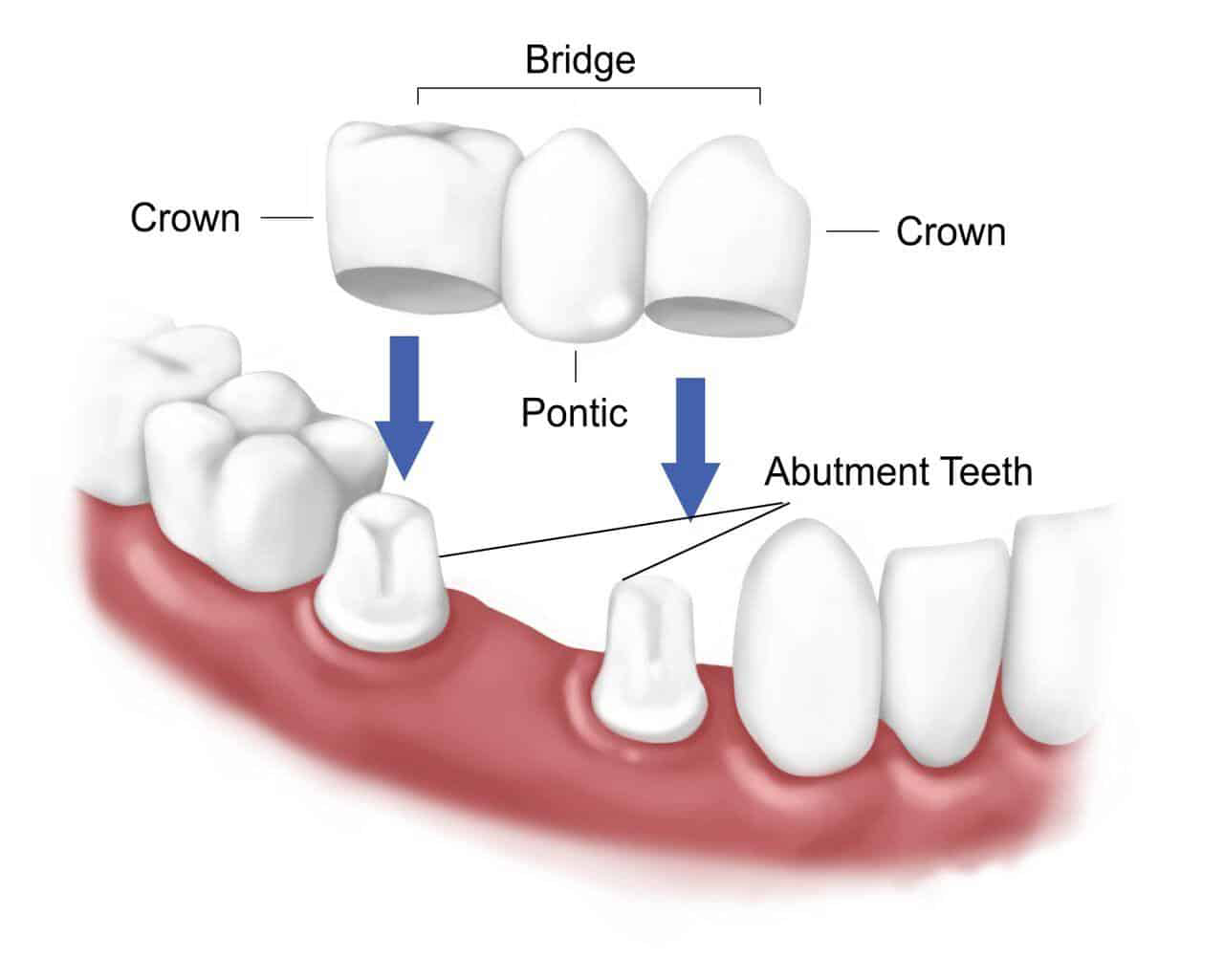
First, the abutment teeth are trimmed so that there is enough space for the crowns to be placed over them. A mould or digital scan of the teeth is then made and transferred to the dental laboratory. A temporary dental bridge will then be placed to protect your teeth and to test run the final result.
Step 2: Issuing of the Dental Bridge
Once the final dental bridge is ready, we will then remove the temporary bridge and cement the new final bridge onto your teeth and any excess cement is removed. We will then check your bite to make sure it is balanced before we do a final polish of your new bridge.
What if I do not want to have my teeth trimmed?
At Elite Dental Group, more patients are choosing NOT to having healthy tooth structure trimmed to support a dental bridge. Dental implants are increasingly popular for this reason.
Please click here to read up about one of our Signature Services: Dental Implants
Frequently
Asked
Questions
Got questions? We’ve got answers! Check out our FAQ section for common inquiries and helpful information to guide you.
Who is suitable for a dental bridge?
Dental implants remain the gold standard for the replacement of one or more missing teeth when patients are medically and anatomically eligible, due to their predictable long-term outcomes and the ability to preserve adjacent tooth structure.
When dental implants are not suitable or not preferred, a dental bridge represents the next most ideal treatment option. Individuals with one or more missing teeth may be considered suitable for a dental bridge if they have healthy adjacent teeth or existing implants that can serve as stable abutments, and if their overall oral health allows for predictable long-term support of the prosthesis. The abutment teeth must be free of extensive restorations, untreated dental caries, and advanced periodontal disease, as these conditions compromise the prognosis of the bridge and increase the risk of failure.
What types of dental bridges are available?
Common types include traditional bridges (supported by natural teeth), cantilever bridges (supported by a single tooth), Maryland bridges (using resin-bonded wings), and implant-supported bridges. Selection depends on the location of missing teeth and the condition of supporting structures.
How long does a dental bridge last?
A dental bridge will typically last 7 to 10 years or longer, with survival rates for conventional bridges at approximately 72% at 10 years and resin-bonded bridges at 65–83% at 10 years, depending on design and material. Bridges supported by implants may demonstrate slightly higher long-term survival, but biological complications such as caries and periodontitis remain the leading causes of failure for both tooth- and implant-supported bridges.
Longevity is strongly influenced by oral hygiene, with poor hygiene and irregular dental visits increasing the risk of biological complications and bridge failure. Regular professional maintenance, prompt management of caries or periodontal disease, and avoidance of excessive biting forces such as bruxism or chewing hard objects are critical for maximizing bridge lifespan
What are the risks and complications?
Dental bridges in people with untreated cavities and gum disease face several important risks. Decay can develop underneath the bridge, gum disease can cause the supporting teeth to fail, and the supporting teeth may need root canal treatment, especially if they already have cavities or large fillings. Chipping or breaking of the bridge is also common, particularly in people who grind their teeth.
Tooth sensitivity is very common after bridge placement, with most patients experiencing sensitivity to cold, air, or biting initially, though this typically improves within a few weeks In patients with existing cavities and gum disease, these complications happen more frequently and bridges fail sooner, making it essential to treat these conditions before getting a bridge.
How should a dental bridge be maintained?
Daily brushing, flossing (including cleaning beneath the bridge), and regular professional dental cleanings are essential for the long-term success of dental bridges. Poor oral hygiene significantly increases the risk of complications, particularly in populations with high rates of dental caries and periodontal disease.
Daily oral hygiene should include twice-daily brushing with fluoride toothpaste. For patients at high risk of caries, prescription-strength fluoride toothpaste (5,000 ppm) is recommended. Interdental cleaning such as flossing with floss threaders, super floss, or interdental brushes is necessary to effectively remove plaque around bridge margins and beneath pontics.
In addition to oral hygiene, patients must avoid biting or chewing on hard objects (such as ice, hard candies, bones, or non-food items), as excessive biting forces can damage the bridge, loosen abutment teeth, or lead to fracture of the prosthesis.
Do I need a Dental bridge or a dental implant?
Dental implants generally offer better long-term survival, help preserve jawbone, and have high patient satisfaction, despite higher initial costs.
Bridges may be preferred when adjacent teeth already have large restorations, when jawbone is insufficient for implants, or when patients wish to avoid surgery.
HOW CAN WE
HELP?
Heading to a dental clinic can be a scary and almost overwhelming experience. If you have landed on our website, we would like to extend our warmest welcome to you and your family. There is nothing to fear!
If you require more information about our costs or are looking for ways to save money on dental treatments, arrange for a consultation with our dentists at a time of your convenience.
 Elite Dental Group